Hotline2 405 505

News

Wednesday, 05 June, 2024
Share

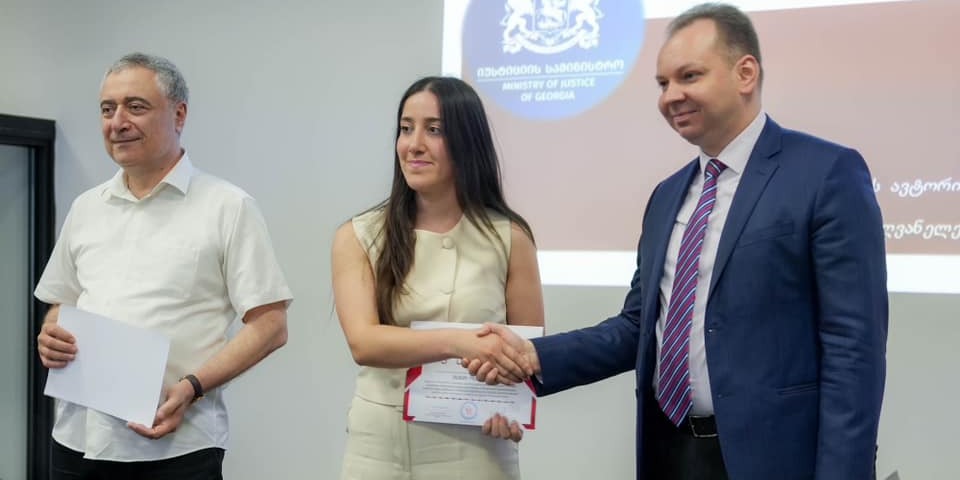
Under the Аauspices of a Ministry of Justice-funded Project, Efforts Are Ongoing to Protect Human Rights in Villages Near the Dividing Line in the Occupied Territories

Within the framework of the project funded by the agency, the Ministry of Justice, continues to make strides in protecting human rights in the villages adjacent to the dividing line in the occupied territories.

Deputy Minister of Justice, Tornike Cheishvili, and Head of Administration, Manana Begiashvili, reviewed the progress of a project aimed at bolstering human rights protection in these areas.

As part of the grant proposal, students living in villages near the dividing line in the occupied territories received training. These trained youths then conducted surveys among senior students in the IDP settlements on basic human rights and security issues. Following the analysis of the survey results, an awareness-raising campaign was initiated. This campaign included specialized training sessions for students in these villages, covering fundamental human rights and conflict resolution.

The project also has a scientific component. A comprehensive study was prepared, involving field specialists and international experts. This study led to the development and distribution of guidelines and the production of special videos.

The project is implemented by the International University of the Caucasus in collaboration with the Ministry of Education and Culture of the Autonomous Republic of Abkhazia and the Student Assistance Club in the villages near the dividing line.

The Ministry of Justice holds an annual grant competition aimed at promoting innovative services, enhancing human rights protection, and strengthening legal security. This year, the Ministry is funding 17 winning projects from this competition.

Other News

Share
Print

The Grand Chamber of the Strasbourg Court Delivers a Judgement on the Cases of the June 20-21, 2019 Demonstrations

The Grand Chamber of the European Court of Human Rights delivered its judgment in the case Tsaava and Others v. Georgia at a public hearing today, 11 December 2025. The case concerns the demonstrations of 20–21 June 2019 and the use of special means to disperse the protesters.

In its judgment, the Grand Chamber reaffirmed that the state has the legitimate right to resort to special means in situations involving attacks or assaults on law enforcement officers and state institutions. The Court also noted that the escalation of the June 20 events and the assault on the Parliament building were encouraged by opposition politicians.

The Court held that the use of force and special means should have been directed exclusively at demonstrators who engaged in violent actions. As the leadership of the Ministry of Internal Affairs at the time failed to ensure adherence to this standard and did not guarantee the proportional use of force, the Court found a violation of Articles 3 (prohibition of ill-treatment), 10 (freedom of expression), and 11 (freedom of assembly) of the European Convention on Human Rights.

The Grand Chamber further noted that the Government of Georgia fully cooperated with the Court during the proceedings and provided all necessary information and materials. Consequently, the applicants’ complaint alleging a lack of cooperation was dismissed. The Court did not find it necessary to examine the complaint under Article 13 (right to an effective remedy).

Following the shortcomings identified in the Chamber’s judgment of 7 May 2024, the government initiated an investigation into the planning and execution of the MIA operation to determine its compliance with the standards established by the European Court.

As a result of this investigation, on 12 November 2025, the Prosecutor’s Office of Georgia initiated criminal proceedings against the former Minister of Internal Affairs, Giorgi Gakharia. The investigation is ongoing.