Hotline2 405 505

News

Saturday, 02 July, 2022
Share

Ministry of Justice Has Started Working on a New Imprisonment Code

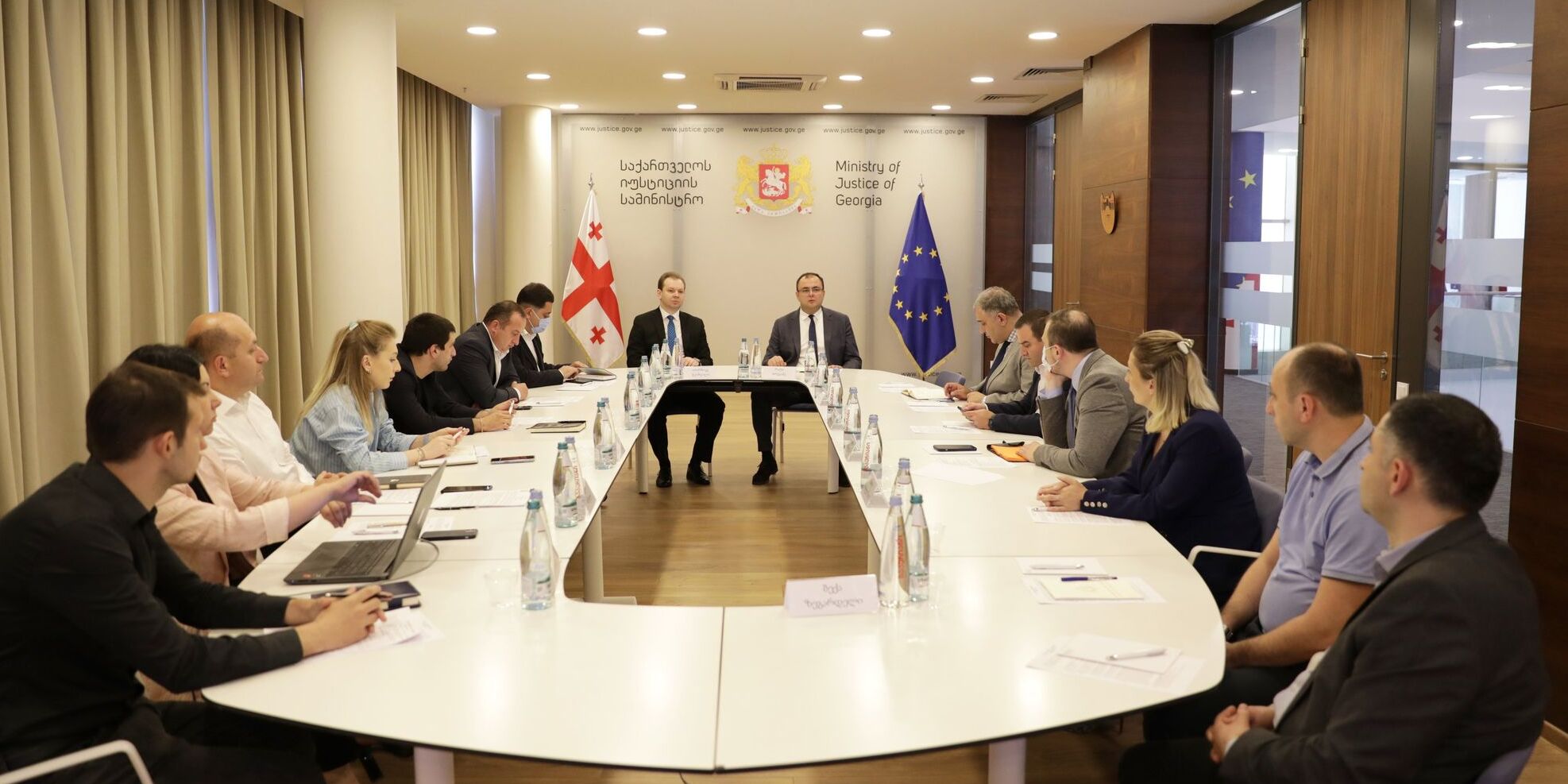
The first review of the planned changes in the penitentiary legislation was held today in the Ministry of Justice in an interdepartmental format. As part of the process, the legislation in the field of penal law will be codified; Both the structure of the legislative act and its content will be revised. As a result, a completely new imprisonment code project will be developed and initiated in the Parliament of Georgia during the fall session.

At the first stage of the legislative reform, the Ministry carried out a critical analysis of the current Imprisonment Code and the Georgian Law on Special Penitentiary Service and presented its vision of changes. The Ministry offers the guests invited to the presentation - representatives of competent state bodies - as well as, in the next phase, academic circles, non-governmental organizations and international missions active participation in the relevant law-making process. Opinions and proposals will be exchanged within the specified time frame, working meetings will be held in intensive mode.

The development of law-making based on scientific conclusions and analytics and the participation of highly qualified experts in the process is one of the priority directions of the Ministry of Justice. Concrete steps have already been taken to realize this goal - the legal scientific journal Iustitia was founded, the second issue of which is already ready for publication; The largest electronic legal base HeinOnline became available to the employees of the Ministry of Justice; For greater involvement of non-governmental organizations, a grant competition was announced in the direction of strengthening the protection of human rights, introducing innovative services, promoting the rehabilitation and re-socialization of convicts and ex-prisoners, and effective crime prevention, within the framework of which, a total of 14 projects were financed; Cooperation with higher educational institutions, their professors and students has become more intensive, relevant memoranda have already been signed with a number of universities.

Representatives of the executive and legislative authorities, the deputy public defender and other invited guests participated in the discussion of the planned legislative changes.

Other News

Share
Print

According to the Strasbourg Court, Publicly Made Insulting, Obscene, and Degrading Statements Fall Outside the Scope of Freedom of Expression

The European Court of Human Rights in Strasbourg upheld the position of the Ministry of Justice in the case of Miladze v. Georgia, confirming that publicly made insulting, obscene, and degrading statements directed at public officials are not protected under the right to freedom of expression.

The case concerned a video published on the social media platform TikTok in 2022, in which the applicant, civil activist Irakli Miladze, used obscene and insulting language toward the Mayor of Tbilisi, City Hall employees, and police officers. As a result, the national courts imposed a fine of 500 GEL, the minimum penalty provided for by law.

The Strasbourg Court unanimously held that the applicant’s statements did not amount to political criticism or the expression of views on a matter of public interest. According to the Court’s assessment, the language used was intended primarily to humiliate and insult public officials.

The Court also agreed with the reasoning of the national courts, noting that they had properly distinguished between harsh political criticism, which is protected in a democratic society, and personal insults, which are not. The judgment further emphasized that the sanction imposed on the applicant was minimal and proportionate, as he received only the lowest fine available under the law.

Today’s ruling by the Strasbourg Court reaffirmed an important principle: freedom of expression is one of the fundamental values of a democratic society and protects even strong and offensive criticism; however, it does not extend to humiliating or personally insulting statements directed at others, including public officials and civil servants.

The judgment further underscores that the state is entitled to protect political officials and public servants from unjustified verbal abuse and insults, ensuring that they are able to perform their duties in an environment free from attacks that undermine their dignity.

The Court’s assessment once again highlights the fundamental importance of freedom of expression, while clearly establishing that the exercise of this right — particularly on the internet and social media platforms — must not infringe upon the dignity and rights of others.