 Geo
Geo Eng
EngNews
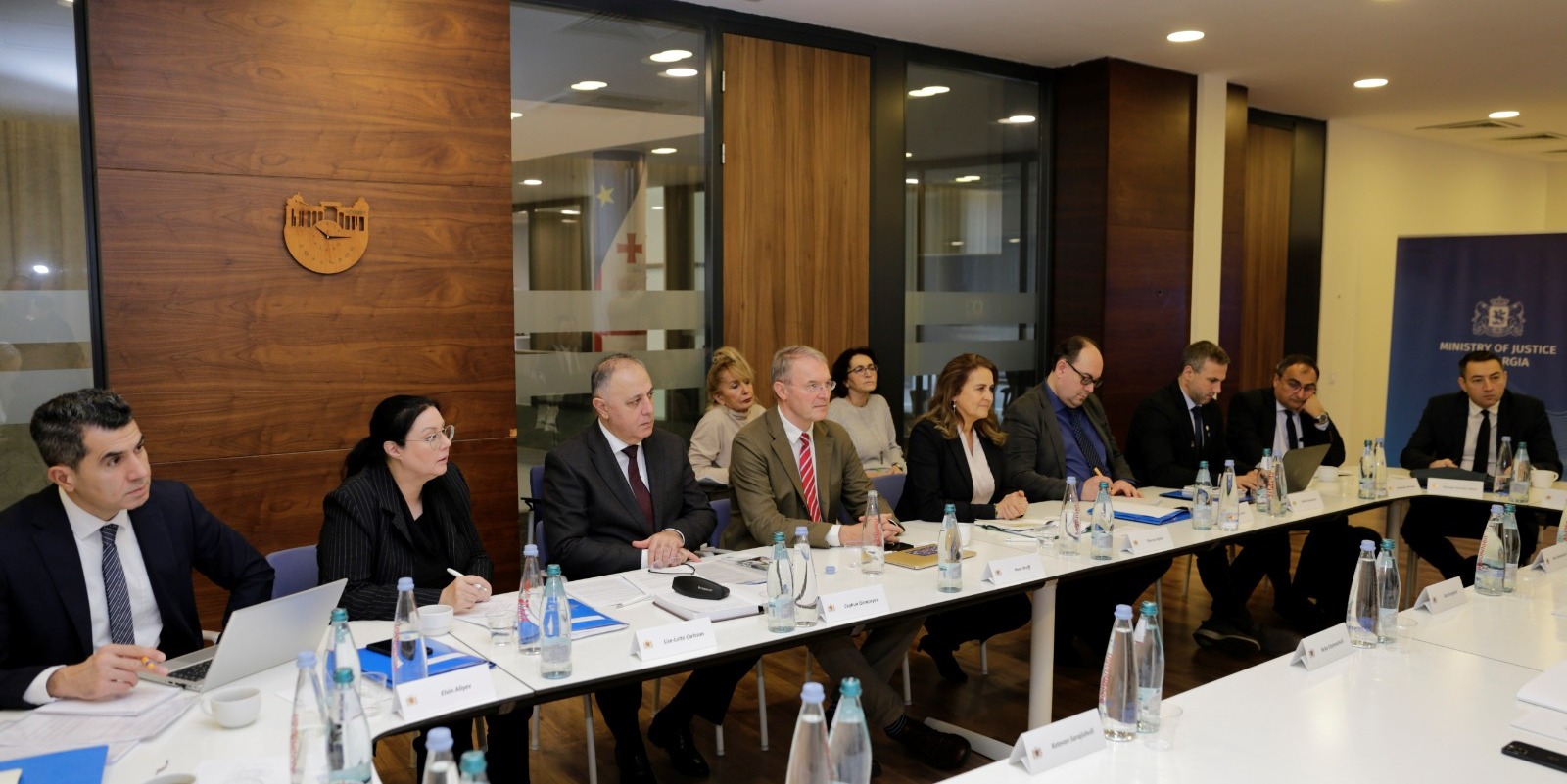
Minister of Justice of Georgia, Rati Bregadze, Welcomes Delegation from the European Committee for the Prevention of Torture (CPT)
The Minister of Justice of Georgia, Rati Bregadze, hosted a delegation from the European Committee for the Prevention of Torture, Inhuman and Degrading Treatment or Punishment (CPT) of the Council of Europe during their 7th periodic visit. The meeting provided an opportunity to discuss ongoing reforms in Georgia's penitentiary system and showcase the innovations introduced in response to recommendations from previous visits.
During the meeting, Minister Bregadze highlighted key advancements, including the adoption of the new Penal Code in 2023, which strengthens protections for the rights of convicts and accused persons, while also enhancing working conditions for penitentiary staff. He introduced the delegation to several innovative initiatives, including the Digital University, a project enabling inmates to pursue higher education remotely through daily interaction with lecturers. The Digital University was recently recognized as one of the top three projects by the European Organization of Prison and Penitentiary Systems (Europris).
The Minister also presented the Public Service Hall initiative within penitentiary institutions. This project provides up to 50 essential public services to inmates in seven facilities (Nos. 1, 2, 5, 8, 10, 12, and 16). Additionally, he introduced the online clinic service, which ensures swift and effective access to medical care for inmates, and the Saakadze Training Base, which offers specialized training for staff across the Penitentiary Service, Probation Agency, National Bureau of Enforcement, and General Inspectorate.
Significant infrastructural advancements were also noted, including the opening of a modern penitentiary facility in the Laituri district in 2023, with another small-scale facility slated to open in Rustavi in early 2025. These upgrades align with the implementation of the penitentiary system’s Sports Strategy, aimed at enhancing physical and mental well-being within the facilities.
Minister Bregadze also emphasized the success of rehabilitation and resocialization programs for inmates, such as the Re-market project, which provides a platform for selling handicrafts made by convicts, fostering both skill development and economic opportunities.
The Minister highlighted a key achievement: since 2012, the European Court of Human Rights (ECHR) has not received a single case originating from Georgia’s penitentiary system—a testament to the country’s progress in ensuring the humane treatment of detainees.
The CPT delegation is set to meet with representatives from the Ministries of Internal Affairs and Health, the Special Investigation Service, and the Public Defender’s Office. They will also visit closed penitentiary and psychiatric institutions, as well as temporary detention facilities.
Deputy Minister of Justice Beka Dzamashvili, Director General of the Special Penitentiary Service, Nika Tshvarashvili, Head of the Department of International Relations and Legal Cooperation of the Ministry of Justice, Ketevan Sarajishvili and Head of the Medical Department of the Special Penitentiary Service, Malkhaz Urtkhmelidze were also present at the meeting.