 Geo
Geo Eng
EngNews
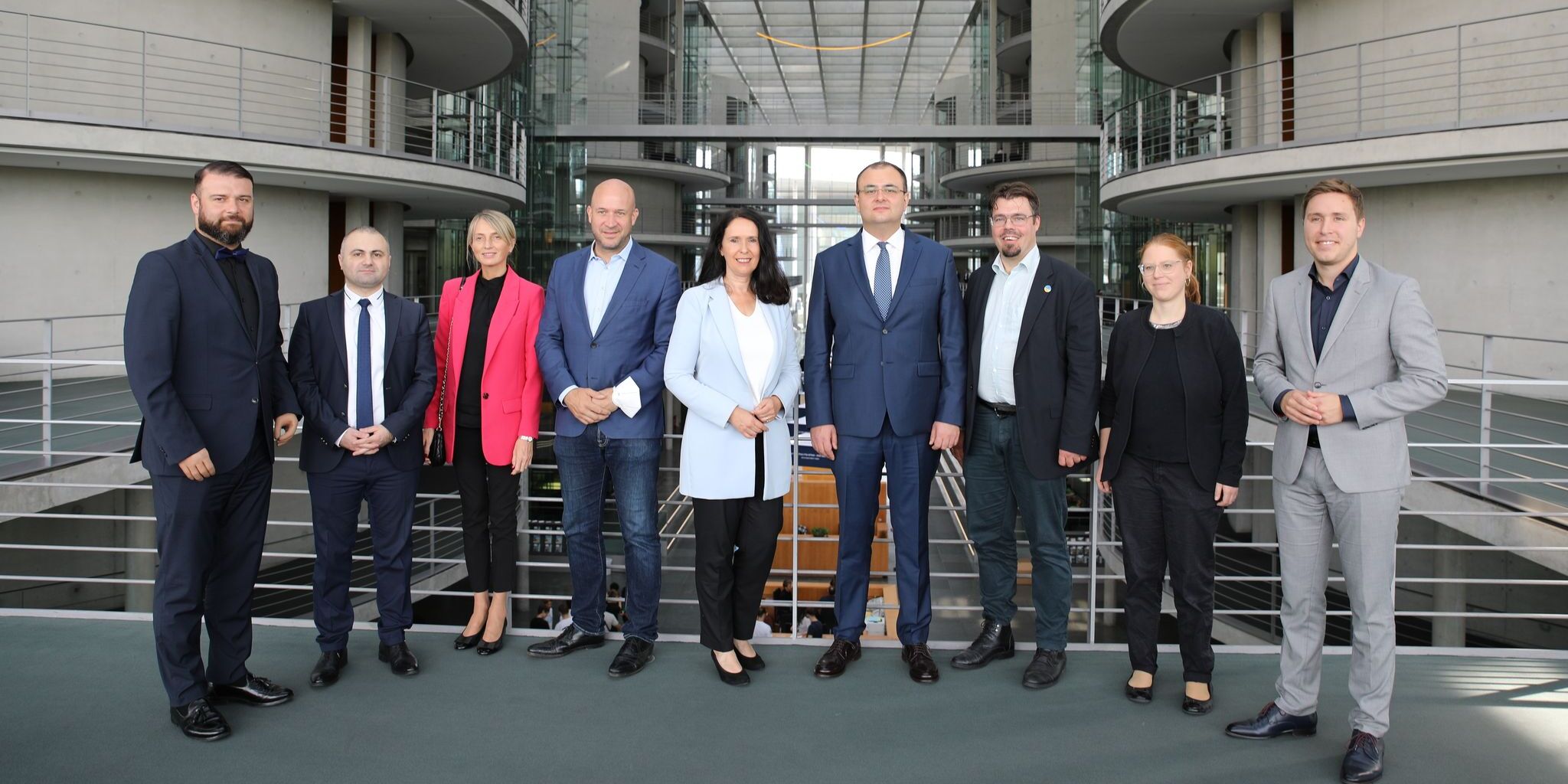
Rati Bregadze Discusses Future Cooperation in the Law-making Process with the Legal Committee of the German Bundestag
Within the framework of his official visit to Germany, the Minister of Justice met today with Chairperson of the Legal Committee of the German Bundestag, Elisabeth Winkelmeier-Becker. First Deputy Minister, Tamar Tkeshelashvili, Deputies, Buba Lomuashvili and Beka Dzamashvili, and Georgian ambassador to Germany, Levan Izoria also attended the meeting.
At the meeting, the minister said that for him, as for the head of the department of law-making activities, the directions of cooperation with the Legal Committee of the Bundestag and the Federal Ministry of Justice of Germany are particularly interesting.
During the meeting, the members of the delegation of the Ministry of Justice also noted that the modern Georgian legal space was formed under the influence of the values established in Germany. Accordingly, the legal institutions regulated by the legislation of Georgia and their components are clearly similar to the German legal system. According to the Minister of Justice, a great contribution to the creation of the legislation of independent Georgia was made by Georgian scientists, who at one time attended the German school of law and used the experience gained in the preparation of the legislative framework.
The Minister of Justice spoke about the fact that in Georgia, as in all other countries, the Ministry of Justice ensures, on the one hand, law-making activities, and on the other hand, the harmonization of Georgian legislation with international legal norms.
As the Chairperson of the Legal Committee of the German Bundestag noted, such important issues as: legal policy, legal state and democracy were discussed at the meeting. "We have a very high interest in Georgia. At the meeting, we got acquainted with the different directions of the activities of the Ministry of Justice, including digital services. We shared our experiences with each other and I think we will continue to do so with pleasure in the future," said Elizabeth Winkelmeier-Becker.
At the end of the meeting held in the Bundestag, Rati Bregadze noted that it is interesting for him to share German experience and learn about research activities. According to the Minister, the agency is working on a new prison code, and it will be important to get acquainted with the German practice on this issue in the format of cooperation.