Hotline2 405 505

News

Monday, 11 March, 2024
Share

Services of the Public Service Hall Become Even More Accessible

Continuing its commitment to enhancing the accessibility of state services, the Public Service Hall is embracing digital transformation initiatives.

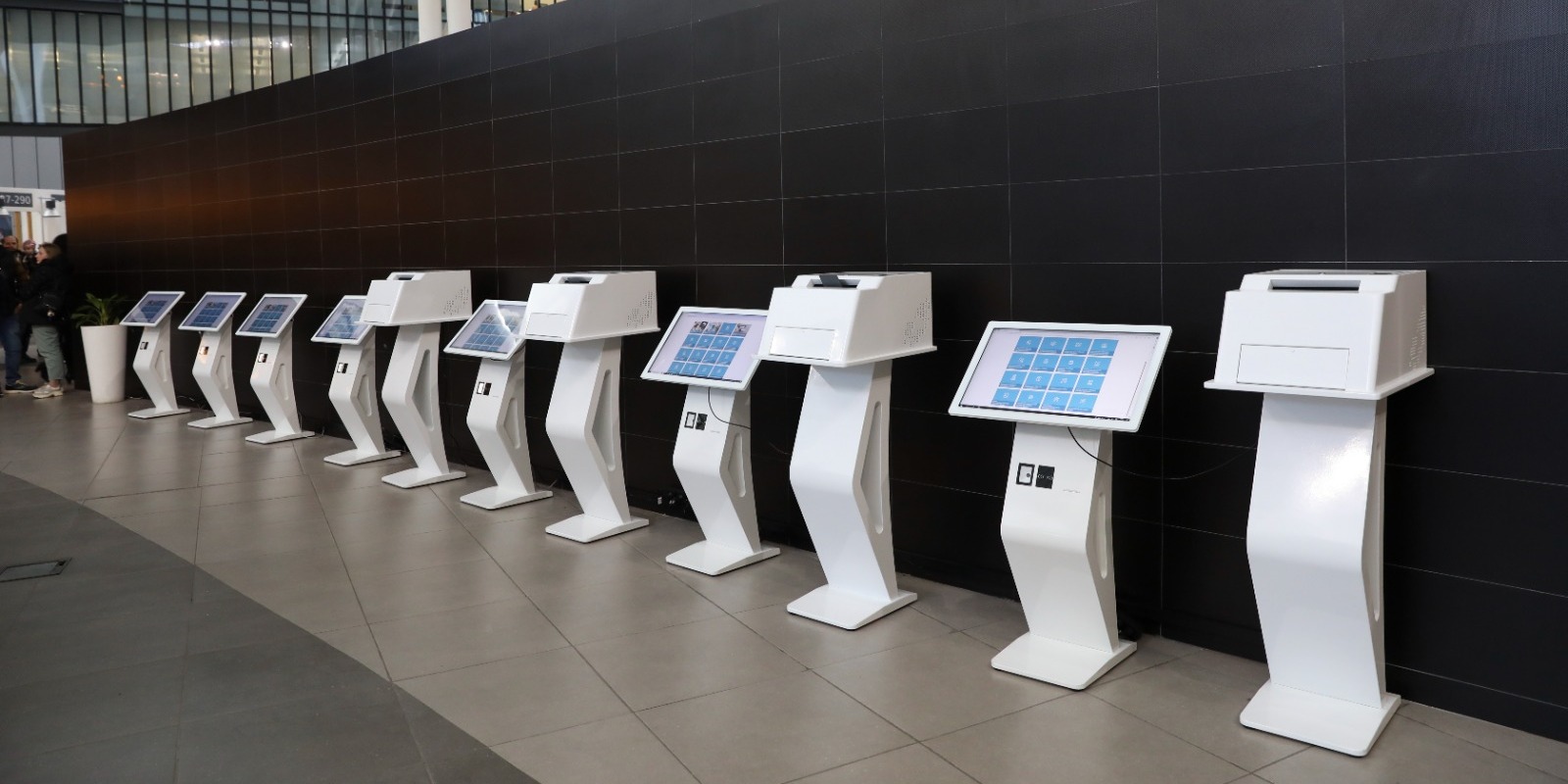
The introduction of a self-service space at the Central Public Service Hall in Tbilisi, currently in its pilot phase, aims to streamline the service delivery process for users. Citizens now have the convenience of independently accessing a range of services through digital channels, without the need for direct assistance from Public Service Hall staff. This initiative promises to expedite service provision and enhance overall user experience.

Throughout the pilot phase, careful attention will be given to soliciting and incorporating customer feedback, ensuring that the final iteration of the self-service space aligns closely with user needs and preferences. Minister of Justice, Rati Bregadze, personally observed the service provision process at the self-service space, underscoring the Ministry's commitment to delivering efficient and user-centric services.

Improving the accessibility of state services remains a top priority for the Ministry of Justice. With 118 Public Service Halls strategically located across the country, citizens can access fast and high-quality services with ease. Additionally, plans are underway to establish branches in all municipalities by the year's end. The innovative Mobile Public Service Hall project further extends service reach, bringing essential services to remote villages nestled in Georgia's high-mountainous regions, covering all ten administrative divisions of the country.

Other News

Share
Print

The Grand Chamber of the Strasbourg Court Delivers a Judgement on the Cases of the June 20-21, 2019 Demonstrations

The Grand Chamber of the European Court of Human Rights delivered its judgment in the case Tsaava and Others v. Georgia at a public hearing today, 11 December 2025. The case concerns the demonstrations of 20–21 June 2019 and the use of special means to disperse the protesters.

In its judgment, the Grand Chamber reaffirmed that the state has the legitimate right to resort to special means in situations involving attacks or assaults on law enforcement officers and state institutions. The Court also noted that the escalation of the June 20 events and the assault on the Parliament building were encouraged by opposition politicians.

The Court held that the use of force and special means should have been directed exclusively at demonstrators who engaged in violent actions. As the leadership of the Ministry of Internal Affairs at the time failed to ensure adherence to this standard and did not guarantee the proportional use of force, the Court found a violation of Articles 3 (prohibition of ill-treatment), 10 (freedom of expression), and 11 (freedom of assembly) of the European Convention on Human Rights.

The Grand Chamber further noted that the Government of Georgia fully cooperated with the Court during the proceedings and provided all necessary information and materials. Consequently, the applicants’ complaint alleging a lack of cooperation was dismissed. The Court did not find it necessary to examine the complaint under Article 13 (right to an effective remedy).

Following the shortcomings identified in the Chamber’s judgment of 7 May 2024, the government initiated an investigation into the planning and execution of the MIA operation to determine its compliance with the standards established by the European Court.

As a result of this investigation, on 12 November 2025, the Prosecutor’s Office of Georgia initiated criminal proceedings against the former Minister of Internal Affairs, Giorgi Gakharia. The investigation is ongoing.