 Geo
Geo Eng
EngNews
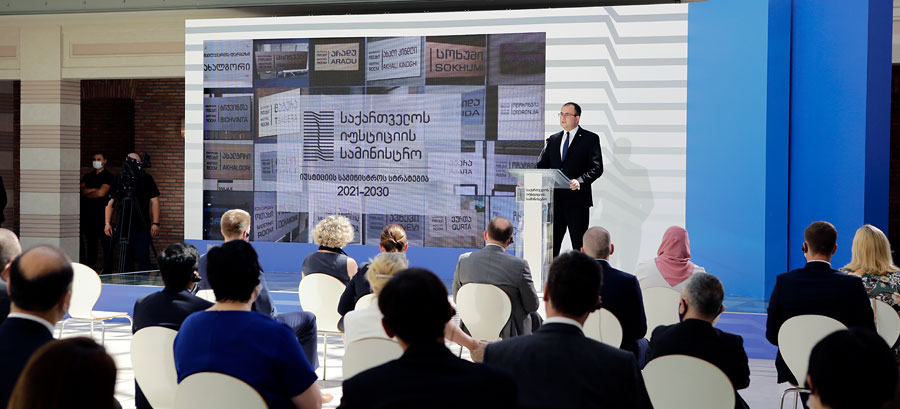
10-year Action Plan for Strategic Development of the Ministry of Justice
If you live in a village that is far from the Public Service Hall and the Community Center, you will no longer have to travel long distances. "Mobile Public Service Hall" will visit you in the village and you will receive the service you want on the spot without leaving home. This is one of the components of the 10-year action plan of the Ministry of Justice. Along with Online University, Personal Assistant, Just App and Probbox, the agency plans to introduce dozens of new services over the next 10 years.
Just App - "Digital Public Service Hall" - is one of the large-scale projects planned by the Ministry of Justice. A unified state application (Just App) will be created, in which electronic services will be integrated. With the Just App, a citizen will be able to access public services remotely using his or her mobile phone, without having to visit the public service hall.
The Public Service Hall will offer a whole new concept to the business sector as well. The main task of the "Personal Assistant" will be to provide high quality remote consulting or services to the customer. This service will be especially convenient for business organizations. In addition, the Public Service Hall will create special spaces for premium services, where the business entity will be able to receive services tailored only to the needs of the business, in a completely different concept environment.
Probbox - is another innovative project of the Ministry of Justice. If before, probationers had to travel long distances to register, now they will go through this procedure through probbox. The devices will be installed in Public Service Halls, Community Centers and local municipal buildings. Registration will become much easier for probationers through the various identification devices built into it.
The subject of special care of the Ministry of Justice of Georgia is crime prevention, probation, professional training of convicts, construction of small, family-type institutions and completely new types of prisons. For the first time in Georgia, a European-standard prison for up to 700 convicts will be opened in Laituri early next year.
Caring for the professional development of convicts is one of the priority directions of the Ministry. Digital University serves this very purpose. The project provides online lecture courses for prisoners led by lecturers accredited by various universities.
The Justice Ministry is also taking concrete steps to eradicate the Soviet legal legacy. Legislative changes will be prepared to bring the current legal norms fully in line with the standards established in modern law. There will no longer be any legal institutions and approaches from the Soviet period in Georgia.
The registration of the land fund remains a strategic direction of the Ministry. The process of initial registration of land plots will be completed during the action plan period. More than 1,000,000 hectares will be registered, which means an additional 1,200,000 registered plots of land. Up to 2700 villages will get verified addresses and a complete address registry will be created.