Hotline2 405 505

News

Saturday, 29 January, 2022
Share

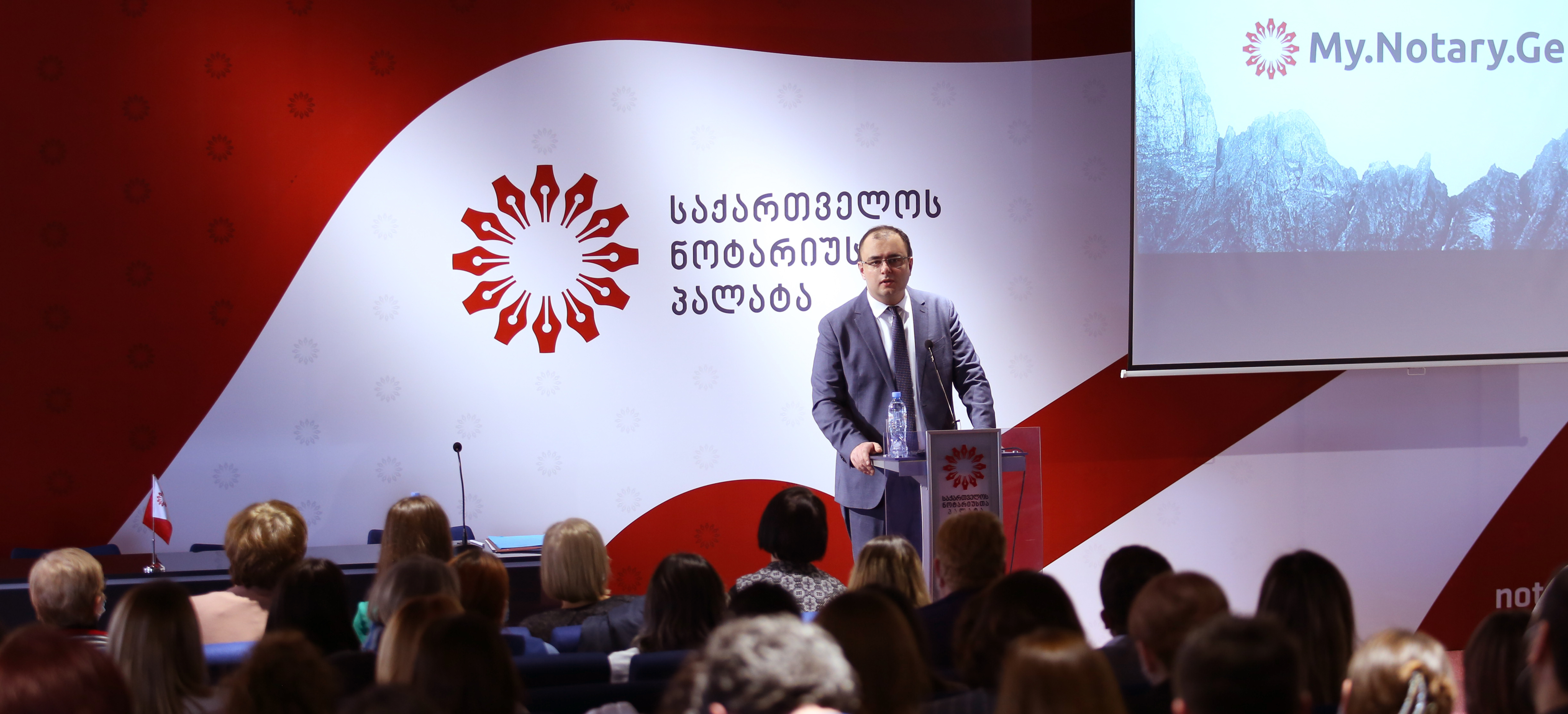
The Notary Chamber Holds a General Assembly of Notaries

Chairperson of the Board of the Notary Chamber, Davit Putkaradze presented today the 2021 report at the general assembly. At the meeting, the notaries approved the 2022 budget of the Notary Chamber and discussed the annual plans.

Minister of Justice, Rati Bregadze addressed the notaries, spoke about the special contribution of notaries to the legal security and human rights process in the country and thanked them for their work.

The Minister also informed the notaries about their future plans and spoke about the legislative initiative, according to which it is planned to increase the age limit for notaries from 65 to 70.

The Chairperson of the Board thanked the Minister of Justice for the support of the Notary Chamber and each notary and presented the planned innovations. Citizens will soon be able to receive online notary services through a mobile application. The mobile application will also integrate other useful functionalities, including a map of notary offices.

At the end of the meeting, the Board held a swearing-in ceremony of the newly appointed notaries, who passed the selection competition held at the Ministry last year and were appointed to the position of notaries. The Chamber of Notaries was joined by 18 new notaries, thus increasing the availability of notary services and the number of settlements where it was possible to receive notary services.

The newly appointed notaries are: Tea Tsitskhvaia (Mtskheta, village Saguramo), Nino Tvalmikhelashvili (Gurjaani), Tea Edisherashvili (Gardabani, Martkopi), Tamta Maisuradze (Aspindza), Lali Zviadadze (Vani), Mari Jvarsheishvili (Gardabani, Gamarjveba village), Nikoloz Berikashvili (Sighnaghi), Natia Jmukhadze (Tsalka), Giorgi Metreveli (Adigeni), Lana Kikvadze (Tsageri), Ketino Tunadze (Shuakhevi), Gvantsa Mikiashvili (Sagarejo), Ana Imerlishvili (Gurjaani, village Jachreti), Mariam Makaridze (Gurjaani), Ekaterine Nikoladze (Terjola), Salome Gvarjaladze (Borjomi), Liana Modebadze (Gurjaani), Nino Kakabadze (Kaspi).

The General Assembly awarded selected notaries for their contribution to the development of notary in the country with the title of "Honorary Notary".

Other News

Share
Print

According to the Strasbourg Court, Publicly Made Insulting, Obscene, and Degrading Statements Fall Outside the Scope of Freedom of Expression

The European Court of Human Rights in Strasbourg upheld the position of the Ministry of Justice in the case of Miladze v. Georgia, confirming that publicly made insulting, obscene, and degrading statements directed at public officials are not protected under the right to freedom of expression.

The case concerned a video published on the social media platform TikTok in 2022, in which the applicant, civil activist Irakli Miladze, used obscene and insulting language toward the Mayor of Tbilisi, City Hall employees, and police officers. As a result, the national courts imposed a fine of 500 GEL, the minimum penalty provided for by law.

The Strasbourg Court unanimously held that the applicant’s statements did not amount to political criticism or the expression of views on a matter of public interest. According to the Court’s assessment, the language used was intended primarily to humiliate and insult public officials.

The Court also agreed with the reasoning of the national courts, noting that they had properly distinguished between harsh political criticism, which is protected in a democratic society, and personal insults, which are not. The judgment further emphasized that the sanction imposed on the applicant was minimal and proportionate, as he received only the lowest fine available under the law.

Today’s ruling by the Strasbourg Court reaffirmed an important principle: freedom of expression is one of the fundamental values of a democratic society and protects even strong and offensive criticism; however, it does not extend to humiliating or personally insulting statements directed at others, including public officials and civil servants.

The judgment further underscores that the state is entitled to protect political officials and public servants from unjustified verbal abuse and insults, ensuring that they are able to perform their duties in an environment free from attacks that undermine their dignity.

The Court’s assessment once again highlights the fundamental importance of freedom of expression, while clearly establishing that the exercise of this right — particularly on the internet and social media platforms — must not infringe upon the dignity and rights of others.