Hotline2 405 505

News

Wednesday, 13 April, 2022
Share

Up to 5,600 Juveniles Avoided Prosecution through Diversion and Mediation Program

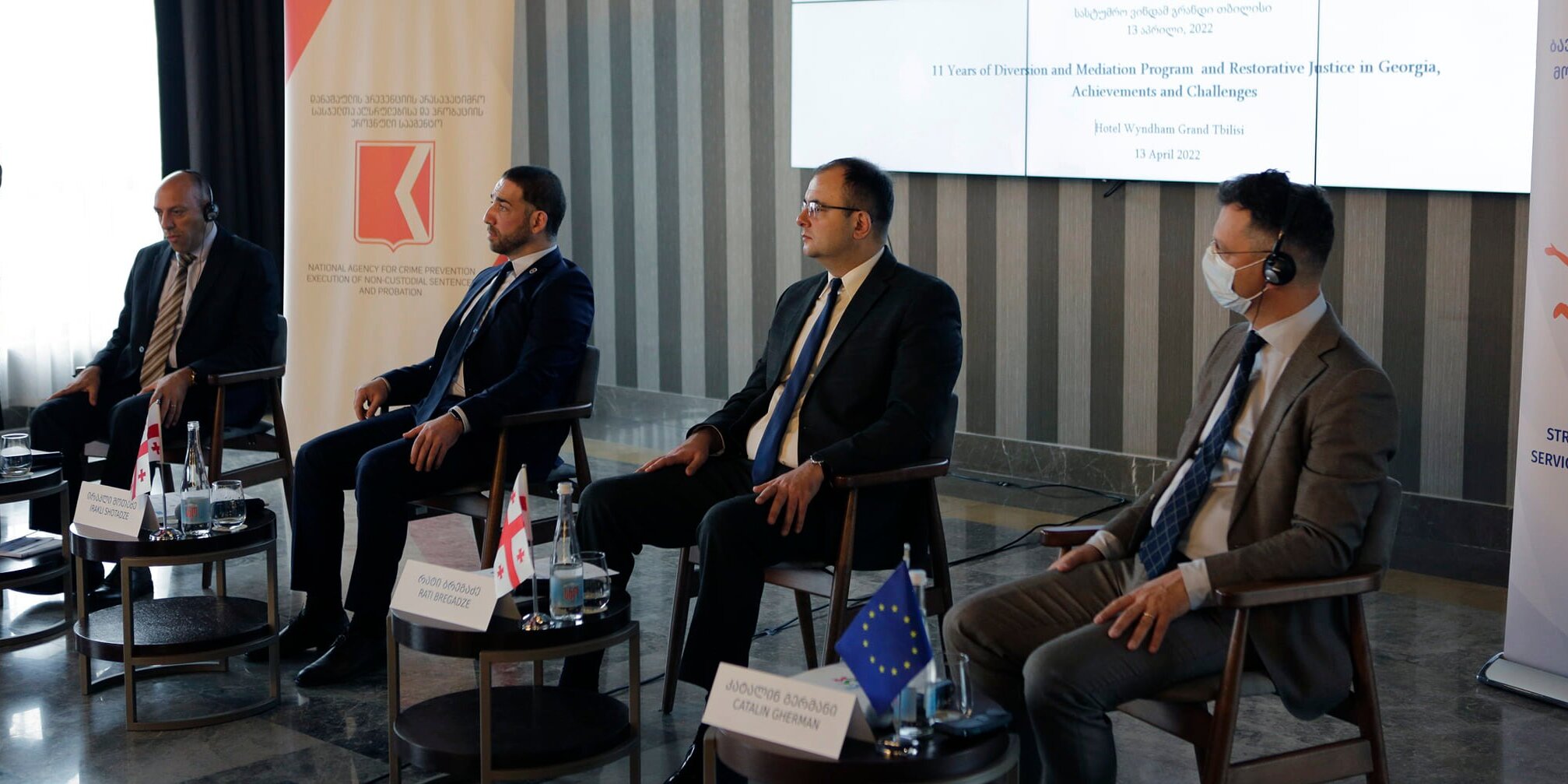
The results of the Eleven Years of Diversion and Mediation Program were summarized at a conference organized by the Ministry of Justice and the United Nations Children's Fund. The event participants discussed the achievements and challenges of the project.

Through the diversion and mediation program, up to 5,600 juveniles were prosecuted during this period. Diversion is an alternative form of punishment that allows a juvenile to take responsibility for his or her own actions and continue to live without a conviction if he or she commits a crime for the first time. The program is implemented by the Agency for Crime Prevention, Execution of Non-custodial Sentences and Probation of the Ministry of Justice in cooperation with the Prosecutor's Office of Georgia.

The diversion and mediation project has been operating in the Georgian judiciary for 11 years. It was originally intended for children under the age of 18 and involved less serious crimes. Since 2014, given the impressive results of the program, diversion has also spread to serious crime cases; Since 2015, when the Juvenile Justice Code came into force, enrollment in the diversion program has also become possible for young people aged 18 to 21.

The conference was addressed by Minister of Justice of Georgia, Rati Bregadze, Prosecutor General of Georgia, Irakli Shotadze, Deputy Head of the EU Delegation to Georgia, Catalin Gherman and UNICEF Representative in Georgia, Ghassan Khalil.

Special attention was paid to the work of the program in the conditions of the pandemic, when the parties involved in the project had to work remotely. Despite these difficulties, the highest successful mediation rate in the diversion programs in 2021 was 65% per annum.

At the end of the conference, awards were presented to professionals involved in the program - successful prosecutors, mediators and social workers.

The event was organized within the framework of the EU project - "Strengthening Systems and Services for Child Protection in Georgia" - and was attended by professionals involved in the implementation of the restorative justice program, representatives of civil society and international organizations.

Other News

Share
Print

According to the Strasbourg Court, Publicly Made Insulting, Obscene, and Degrading Statements Fall Outside the Scope of Freedom of Expression

The European Court of Human Rights in Strasbourg upheld the position of the Ministry of Justice in the case of Miladze v. Georgia, confirming that publicly made insulting, obscene, and degrading statements directed at public officials are not protected under the right to freedom of expression.

The case concerned a video published on the social media platform TikTok in 2022, in which the applicant, civil activist Irakli Miladze, used obscene and insulting language toward the Mayor of Tbilisi, City Hall employees, and police officers. As a result, the national courts imposed a fine of 500 GEL, the minimum penalty provided for by law.

The Strasbourg Court unanimously held that the applicant’s statements did not amount to political criticism or the expression of views on a matter of public interest. According to the Court’s assessment, the language used was intended primarily to humiliate and insult public officials.

The Court also agreed with the reasoning of the national courts, noting that they had properly distinguished between harsh political criticism, which is protected in a democratic society, and personal insults, which are not. The judgment further emphasized that the sanction imposed on the applicant was minimal and proportionate, as he received only the lowest fine available under the law.

Today’s ruling by the Strasbourg Court reaffirmed an important principle: freedom of expression is one of the fundamental values of a democratic society and protects even strong and offensive criticism; however, it does not extend to humiliating or personally insulting statements directed at others, including public officials and civil servants.

The judgment further underscores that the state is entitled to protect political officials and public servants from unjustified verbal abuse and insults, ensuring that they are able to perform their duties in an environment free from attacks that undermine their dignity.

The Court’s assessment once again highlights the fundamental importance of freedom of expression, while clearly establishing that the exercise of this right — particularly on the internet and social media platforms — must not infringe upon the dignity and rights of others.