Hotline2 405 505

News

Monday, 26 September, 2022
Share

Minister of Justice of Georgia Meets Deputy Prosecutor of the Hague International Criminal Court to Discuss Investigation of August War Crimes

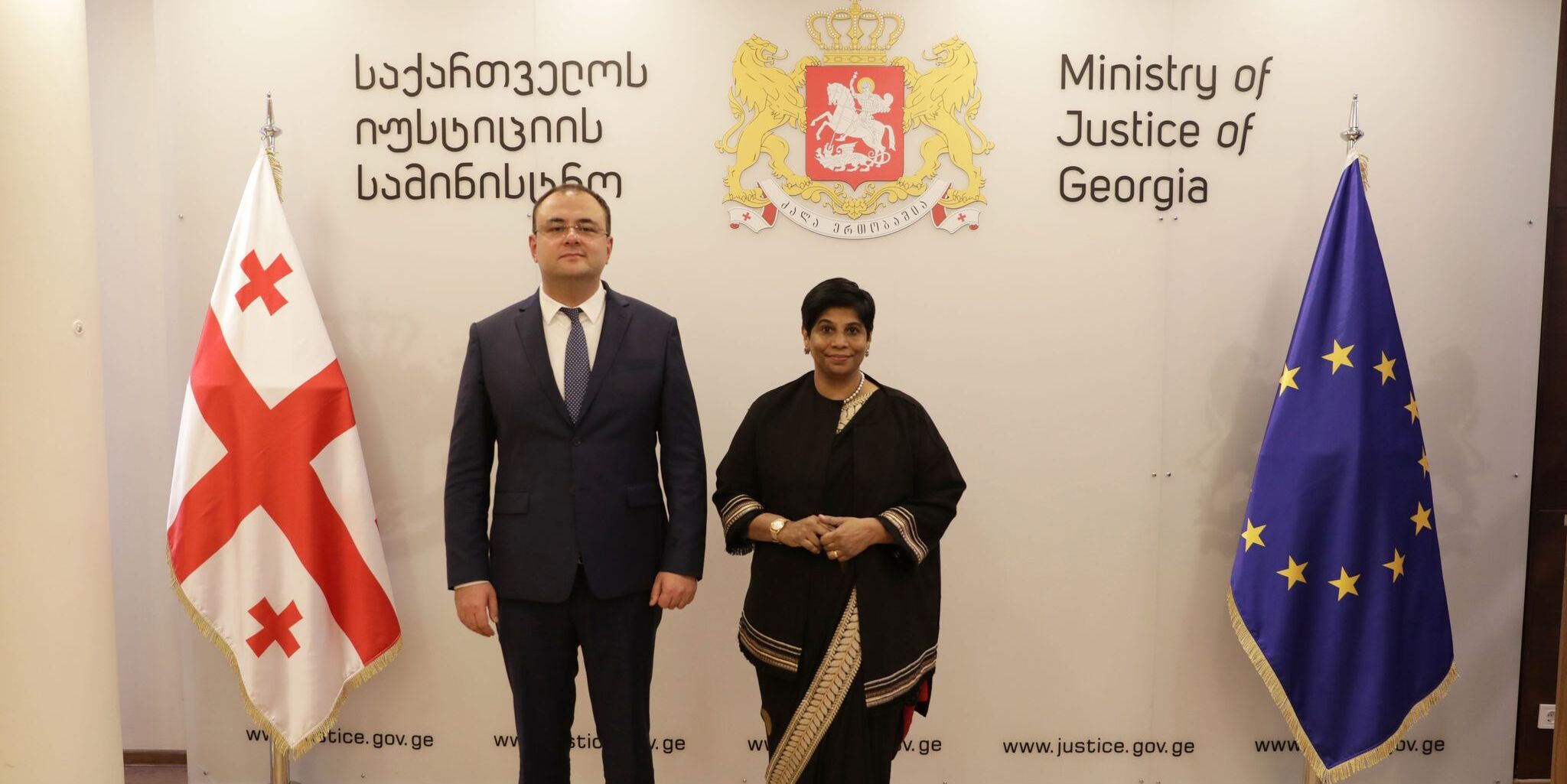
Minister of Justice of Georgia, Rati Bregadze met today with the Deputy Prosecutor of the International Criminal Court, Nazhat Shameem Khan and talked about the investigation of August war crimes. Deputy Minister of Justice Beka Dzamashvili also attended the meeting.

At the meeting with the Deputy Prosecutor of the ICC, Rati Bregadze once again confirmed that the Georgian side is ready to cooperate closely with the Hague court within the framework of the investigation of the 2008 war. As a result of this successful cooperation, on June 30, 2022, the ICC issued an arrest warrant against 3 "high-ranking officials" of the Tskhinvali region for the episode of crimes committed against Georgian civilian prisoners during the August war.

Speaking to Nazhat Shameem Khan, Rati Bregadze emphasized the fact that the Grand Chamber of the European Court of Human Rights has already established the responsibility of the Russian Federation for crimes committed against civil and military personnel, such as: ethnic cleansing of Georgians in the Tskhinvali region; killing and torture of Georgian prisoners of war and civilians; Inhuman and degrading treatment.

The Minister of Justice of Georgia expressed hope that, following in the footsteps of the Strasbourg Court, the Hague Court, within its jurisdiction, will not leave without a legal response the facts that happened in the Tskhinvali region in August 2008, will impose appropriate punishment on all criminals and will make a significant contribution to the victims of war and crimes against humanity in the process of restoring justice.

At the end of the meeting, Rati Bregadze noted that ensuring state representation in international courts and consistent strategic litigation is a priority of the Ministry of Justice. The Ministry of Justice, as the coordinating agency for state representation in international courts, will continue to protect the national interests and sovereignty of Georgia in the Strasbourg and Hague courts in the future.

Other News

Share
Print

According to the Strasbourg Court, Publicly Made Insulting, Obscene, and Degrading Statements Fall Outside the Scope of Freedom of Expression

The European Court of Human Rights in Strasbourg upheld the position of the Ministry of Justice in the case of Miladze v. Georgia, confirming that publicly made insulting, obscene, and degrading statements directed at public officials are not protected under the right to freedom of expression.

The case concerned a video published on the social media platform TikTok in 2022, in which the applicant, civil activist Irakli Miladze, used obscene and insulting language toward the Mayor of Tbilisi, City Hall employees, and police officers. As a result, the national courts imposed a fine of 500 GEL, the minimum penalty provided for by law.

The Strasbourg Court unanimously held that the applicant’s statements did not amount to political criticism or the expression of views on a matter of public interest. According to the Court’s assessment, the language used was intended primarily to humiliate and insult public officials.

The Court also agreed with the reasoning of the national courts, noting that they had properly distinguished between harsh political criticism, which is protected in a democratic society, and personal insults, which are not. The judgment further emphasized that the sanction imposed on the applicant was minimal and proportionate, as he received only the lowest fine available under the law.

Today’s ruling by the Strasbourg Court reaffirmed an important principle: freedom of expression is one of the fundamental values of a democratic society and protects even strong and offensive criticism; however, it does not extend to humiliating or personally insulting statements directed at others, including public officials and civil servants.

The judgment further underscores that the state is entitled to protect political officials and public servants from unjustified verbal abuse and insults, ensuring that they are able to perform their duties in an environment free from attacks that undermine their dignity.

The Court’s assessment once again highlights the fundamental importance of freedom of expression, while clearly establishing that the exercise of this right — particularly on the internet and social media platforms — must not infringe upon the dignity and rights of others.