Hotline2 405 505

News

Wednesday, 15 May, 2024
Share

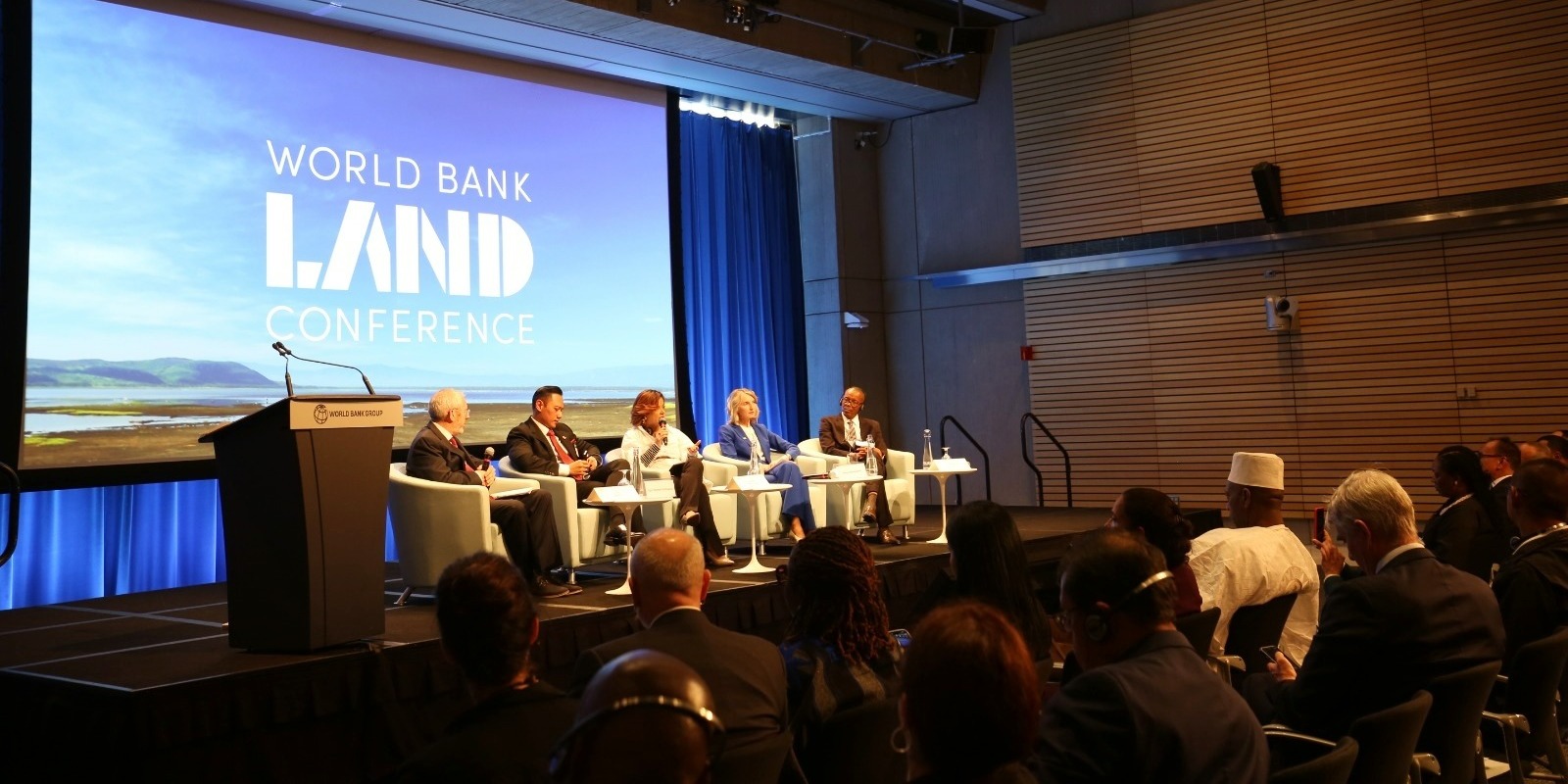
The Session of the World Bank Conference - Strategies for the success of Champion Governments - Highlights Georgia's Success in Land Registration

First Deputy Minister of Justice, Tamar Tkeshelashvili, presented the Georgian model of land reform to representatives from over 100 countries at the World Bank Conference in Washington.

Tkeshelashvili discussed the collaborative pilot project between the National Public Registry Agency and the World Bank, titled - Irrigation and Land Market Development.

The World Bank mission praised the project's systematic registration methodology and technological solutions as exemplary, noting Georgia's high potential to provide expert support to other nations.

Drawing on the insights and experiences gained from the pilot project, Georgia has been conducting systematic land registration in 59 municipalities since 2022, funded by the state. This initiative is set to be completed by 2024. To date, over 1,000,000 land plots have been measured, with ownership rights registered for more than 700,000 plots. On average, 4,000 plots of land are measured daily.

Tkeshelashvili emphasized the importance of integrating high-tech services, highlighting Georgian innovations that have made the land registration process fully electronic, thus faster and more accessible for citizens. Additionally, she introduced the upcoming Smart Contract service, which utilizes modern technology to allow citizens to conduct real estate transactions remotely, pay fees, and register ownership rights via electronic devices.

The National Public Registry Agency also has an exhibition space at the World Bank conference. In upcoming sessions, David Devidze, Head of the National Public Registry Agency, will share Georgia's experiences on various land administration issues with other countries.

Other News

Share
Print

The Grand Chamber of the Strasbourg Court Delivers a Judgement on the Cases of the June 20-21, 2019 Demonstrations

The Grand Chamber of the European Court of Human Rights delivered its judgment in the case Tsaava and Others v. Georgia at a public hearing today, 11 December 2025. The case concerns the demonstrations of 20–21 June 2019 and the use of special means to disperse the protesters.

In its judgment, the Grand Chamber reaffirmed that the state has the legitimate right to resort to special means in situations involving attacks or assaults on law enforcement officers and state institutions. The Court also noted that the escalation of the June 20 events and the assault on the Parliament building were encouraged by opposition politicians.

The Court held that the use of force and special means should have been directed exclusively at demonstrators who engaged in violent actions. As the leadership of the Ministry of Internal Affairs at the time failed to ensure adherence to this standard and did not guarantee the proportional use of force, the Court found a violation of Articles 3 (prohibition of ill-treatment), 10 (freedom of expression), and 11 (freedom of assembly) of the European Convention on Human Rights.

The Grand Chamber further noted that the Government of Georgia fully cooperated with the Court during the proceedings and provided all necessary information and materials. Consequently, the applicants’ complaint alleging a lack of cooperation was dismissed. The Court did not find it necessary to examine the complaint under Article 13 (right to an effective remedy).

Following the shortcomings identified in the Chamber’s judgment of 7 May 2024, the government initiated an investigation into the planning and execution of the MIA operation to determine its compliance with the standards established by the European Court.

As a result of this investigation, on 12 November 2025, the Prosecutor’s Office of Georgia initiated criminal proceedings against the former Minister of Internal Affairs, Giorgi Gakharia. The investigation is ongoing.