Hotline2 405 505

News

Wednesday, 02 October, 2024
Share

Justice Minister Rati Bregadze Highlights the Success of Another Project under the Ministry’s Grant Program

As part of the project, recommendations were developed to enhance the standard for justifying normative acts in the law-making process. The project’s authors conducted a thorough analysis of EU member states’ practices regarding the justification of draft laws, focusing on the forms and mechanisms used in explanatory notes. The research findings were subsequently presented.

The project aims to improve Georgia's legislative process by aligning the standard for explanatory notes with EU practices. The recommendations were prepared by Associate Professor Vasil Gonashvili and Professor Nana Chigladze from Tbilisi State University.

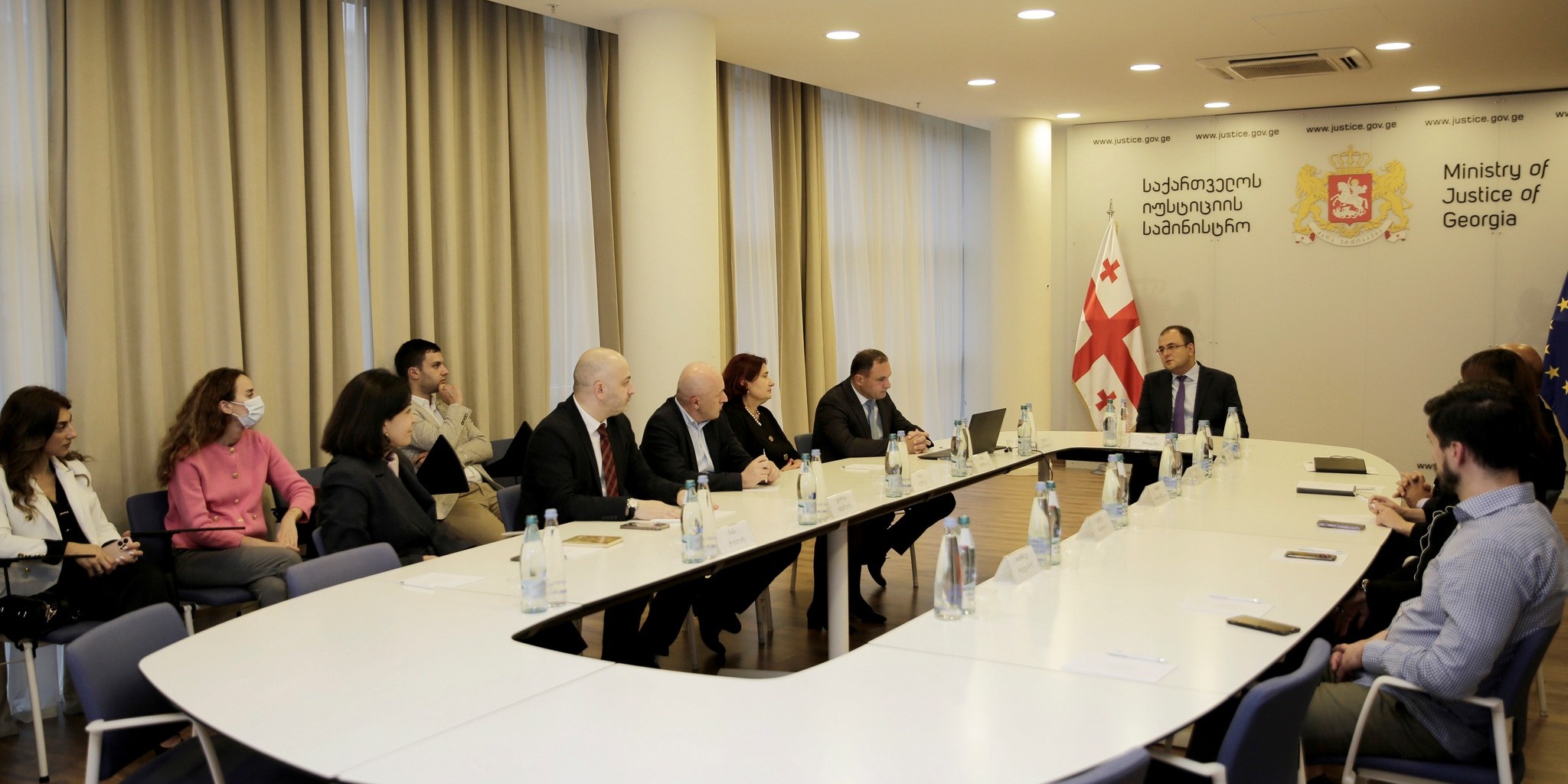
The presentation of the project results was attended by the heads of relevant Ministry departments, representatives from the academic community, and the authors themselves.

Each year, the Ministry of Justice holds a grant competition aimed at encouraging innovation in services, strengthening human rights protection, and enhancing legal security. This year, the Ministry is funding 17 winning projects through the grant program, which aims to foster civil society participation in Ministry activities and support civil initiatives.

Other News

Share
Print
Share
Print

According to the Strasbourg Court, Publicly Made Insulting, Obscene, and Degrading Statements Fall Outside the Scope of Freedom of Expression

The European Court of Human Rights in Strasbourg upheld the position of the Ministry of Justice in the case of Miladze v. Georgia, confirming that publicly made insulting, obscene, and degrading statements directed at public officials are not protected under the right to freedom of expression.

The case concerned a video published on the social media platform TikTok in 2022, in which the applicant, civil activist Irakli Miladze, used obscene and insulting language toward the Mayor of Tbilisi, City Hall employees, and police officers. As a result, the national courts imposed a fine of 500 GEL, the minimum penalty provided for by law.

The Strasbourg Court unanimously held that the applicant’s statements did not amount to political criticism or the expression of views on a matter of public interest. According to the Court’s assessment, the language used was intended primarily to humiliate and insult public officials.

The Court also agreed with the reasoning of the national courts, noting that they had properly distinguished between harsh political criticism, which is protected in a democratic society, and personal insults, which are not. The judgment further emphasized that the sanction imposed on the applicant was minimal and proportionate, as he received only the lowest fine available under the law.

Today’s ruling by the Strasbourg Court reaffirmed an important principle: freedom of expression is one of the fundamental values of a democratic society and protects even strong and offensive criticism; however, it does not extend to humiliating or personally insulting statements directed at others, including public officials and civil servants.

The judgment further underscores that the state is entitled to protect political officials and public servants from unjustified verbal abuse and insults, ensuring that they are able to perform their duties in an environment free from attacks that undermine their dignity.

The Court’s assessment once again highlights the fundamental importance of freedom of expression, while clearly establishing that the exercise of this right — particularly on the internet and social media platforms — must not infringe upon the dignity and rights of others.