Hotline2 405 505

News

Tuesday, 05 March, 2024
Share

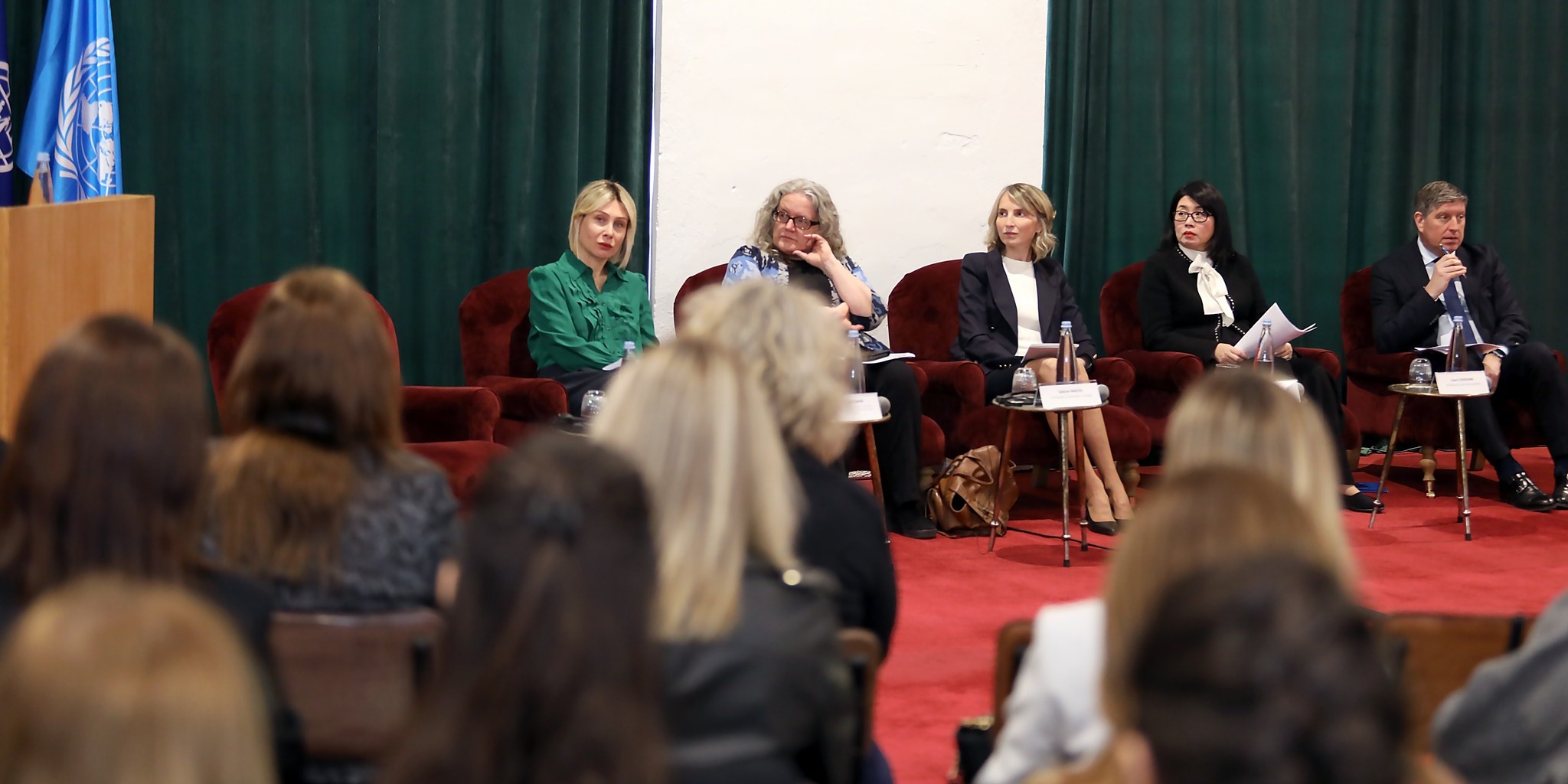
First Deputy Minister of Justice Tamar Tkeshelashvili Speaks About the Role of Women in the Management of Migration Processes at the UN International Organization for Migration Event

The First Deputy Minister of Justice underscored the role of gender equality and the importance of women in migration management at an event organized by the International Organization for Migration. Recent legal and institutional reforms stand as a testament to this commitment, with the Ministry of Justice steadfastly ensuring gender parity across all spheres within its competence.

Highlighting statistics, Tkeshelashvili revealed that 47% of real estate owners in Georgia are women, signalling the nation's dedication to a comprehensive, inclusive approach with active societal engagement.

Providing insight into concrete actions, Tkeshelashvili disclosed that out of 1,857 migrants registered in the state reintegration program between 2022 and 2023, 63% were women. Furthermore, among the 542 beneficiaries receiving financial aid, 61% were women. Women also constituted a significant portion of beneficiaries in other key areas, such as qualification enhancement and self-employment initiatives.

Emphasizing Georgia's commitment to prioritizing migrant return and reintegration, the Deputy Minister highlighted ongoing targeted programs aimed at facilitating seamless reintegration, with active participation from the migrants themselves.

At the end of the speech, Tkeshelashvili extended thanks to the International Organization for Migration for its unwavering support in migrant discussion, return, and reintegration efforts. Additionally, she underscored the vital roles played by the United Nations and the European Union in bolstering Georgia's European integration path, which, in turn, profoundly influences migration policy management.

Other News

Share
Print

The Grand Chamber of the Strasbourg Court Delivers a Judgement on the Cases of the June 20-21, 2019 Demonstrations

The Grand Chamber of the European Court of Human Rights delivered its judgment in the case Tsaava and Others v. Georgia at a public hearing today, 11 December 2025. The case concerns the demonstrations of 20–21 June 2019 and the use of special means to disperse the protesters.

In its judgment, the Grand Chamber reaffirmed that the state has the legitimate right to resort to special means in situations involving attacks or assaults on law enforcement officers and state institutions. The Court also noted that the escalation of the June 20 events and the assault on the Parliament building were encouraged by opposition politicians.

The Court held that the use of force and special means should have been directed exclusively at demonstrators who engaged in violent actions. As the leadership of the Ministry of Internal Affairs at the time failed to ensure adherence to this standard and did not guarantee the proportional use of force, the Court found a violation of Articles 3 (prohibition of ill-treatment), 10 (freedom of expression), and 11 (freedom of assembly) of the European Convention on Human Rights.

The Grand Chamber further noted that the Government of Georgia fully cooperated with the Court during the proceedings and provided all necessary information and materials. Consequently, the applicants’ complaint alleging a lack of cooperation was dismissed. The Court did not find it necessary to examine the complaint under Article 13 (right to an effective remedy).

Following the shortcomings identified in the Chamber’s judgment of 7 May 2024, the government initiated an investigation into the planning and execution of the MIA operation to determine its compliance with the standards established by the European Court.

As a result of this investigation, on 12 November 2025, the Prosecutor’s Office of Georgia initiated criminal proceedings against the former Minister of Internal Affairs, Giorgi Gakharia. The investigation is ongoing.