Hotline2 405 505

News

Tuesday, 07 July, 2026
Share

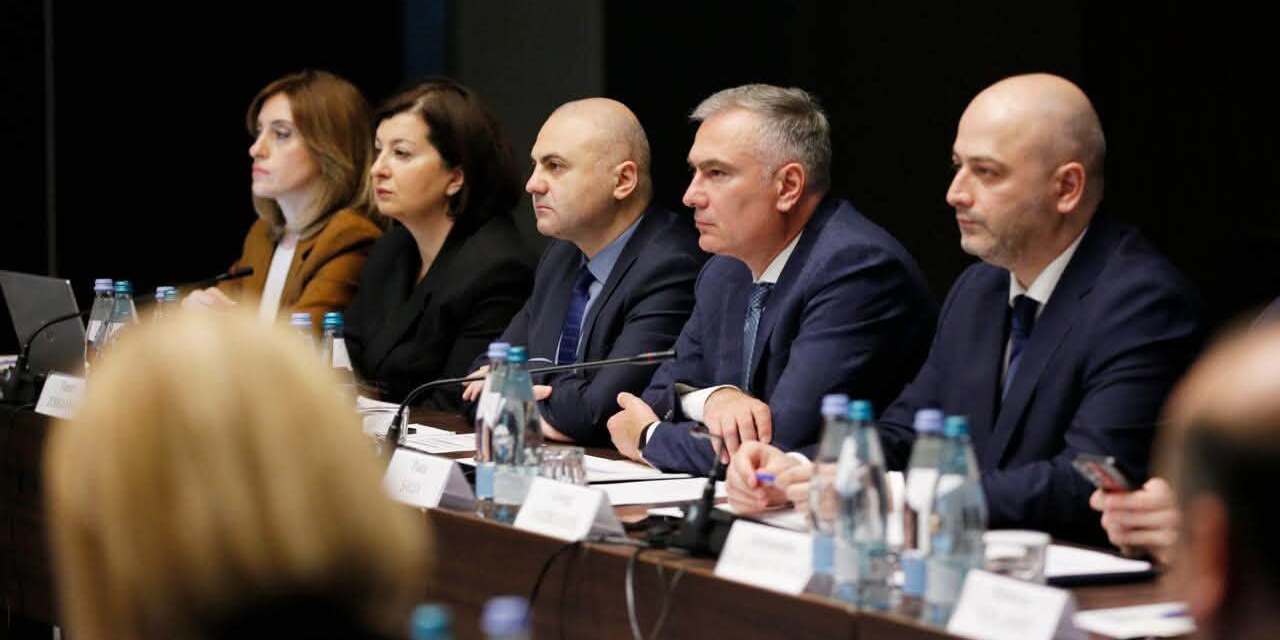
Minister of Justice of Georgia Paata Salia Opens the 35th Session of the State Commission on Migration Issues

The 35th session of the State Commission on Migration Issues was opened by the Chairman of the Commission, Minister of Justice of Georgia Paata Salia.

In his opening remarks, the Minister highlighted the Government of Georgia’s migration policy and emphasized the importance of migration-related issues within the framework of national priorities, as well as the broader regional and international agenda.

According to Paata Salia, the evolving nature of contemporary migration processes — shaped by security considerations, economic development needs, and demographic challenges — requires the state to pursue a flexible, evidence-based, and forward-looking policy. Such an approach is essential to effectively address emerging challenges while making full use of the opportunities associated with migration.

During the session, participants heard a presentation by the Ministry of Internal Affairs of Georgia on recent legislative amendments in the field of migration. These amendments were developed through effective cooperation among the member agencies of the State Commission on Migration Issues and the Parliament of Georgia.

The members of the Commission also reviewed the outcomes of the UN International Migration Review Forum (IMRF), where the Georgian inter-agency delegation presented the country’s experience and reforms in the field of migration to international partners.

The expanded session was attended by representatives of relevant state institutions, international organizations, and the Public Defender’s Office of Georgia.

The State Commission on Migration Issues is a consultative body of the Government of Georgia chaired by the Ministry of Justice of Georgia. The Secretariat of the Commission is carried out by the LEPL State Services Development Agency.

Other News

Share
Print

Justice Minister Meets Young Persons Selected for Paid Internship Program

Minister of Justice of Georgia Paata Salia met with 189 interns selected to join the Justice Ministry system under the state-paid internship program initiated by the Prime Minister.

The Minister congratulated the young students on successfully completing the selection process and noted that the internship represents an important first step into a professional environment and an opportunity to gain practical experience. He encouraged the interns to make the most of the program, take initiative, ask questions, share their views, and actively engage in the work of their respective institutions.

Paata Salia stressed that the Ministry of Justice views the internship not only as an opportunity for young people to acquire professional knowledge and practical skills, but also as an important mechanism for attracting young, qualified professionals to the system. The Ministry aims to ensure that, for successful interns, the program can lead to further professional development and employment opportunities.

In 2026, a total of 293 internship vacancies were announced across the Ministry of Justice and 12 legal entities under public law within its system, attracting 6,639 applications. Following the selection process, 189 interns were selected.

In 2025, 109 of the 156 interns admitted under the program had their internships extended, with some subsequently securing employment.

The internship lasts three months, with the possibility of extension. The program is paid, and the internship period counts toward the interns’ work experience and length of service.

Share
Print

Korea–Georgia Strategic Forum on “Artificial Intelligence in Public Administration” Held in Tbilisi

The forum was opened by Tamar Zodelava, Deputy Minister of Justice of Georgia, and Haisun Choi, Director of Intergovernmental Cooperation on Artificial Intelligence at the Ministry of the Interior and Safety of the Republic of Korea.

Tamar Zodelava highlighted the importance of the responsible and safe use of artificial intelligence in the public sector, particularly at a time when technology is increasingly transforming the delivery of public services and the way governments interact with citizens. She noted that, alongside the development of artificial intelligence, it is essential to establish appropriate legal and institutional mechanisms to ensure that technological progress is balanced with the protection of human rights, transparency, and a citizen-centered approach.

The Deputy Minister also emphasized the importance of international cooperation and the sharing of experience, noting that the Digital Cooperation Center established within the framework of the partnership between Georgia and the Republic of Korea is an important mechanism for strengthening cooperation in this area.

The event was held as part of government-level cooperation between Georgia and the Republic of Korea, with the main objective of sharing experience in the use of artificial intelligence in public administration and exploring new opportunities for bilateral partnership.

Forum participants discussed AI governance issues in light of the experiences of Georgia and the Republic of Korea, as well as opportunities for the practical application of artificial intelligence in the public sector. Discussions also focused on the development of trusted digital infrastructure as a foundation for creating secure and scalable AI-enabled public services. Participants addressed challenges associated with the implementation of artificial intelligence in the public sector, including security, accountability, policy, and regulatory issues, and identified areas for joint initiatives.

The forum was held within the framework of a memorandum of understanding signed between the Ministry of Justice of Georgia and the Ministry of the Interior and Safety of the Republic of Korea. Representatives of relevant government agencies, local authorities, and organizations associated with the public sector from Georgia and the Republic of Korea participated in the event.