Hotline2 405 505

News

Saturday, 29 October, 2022
Share

For the first time in Georgia, the Innovative Educational Project for Convicts - Digital University Launches in Penitentiary Institutions

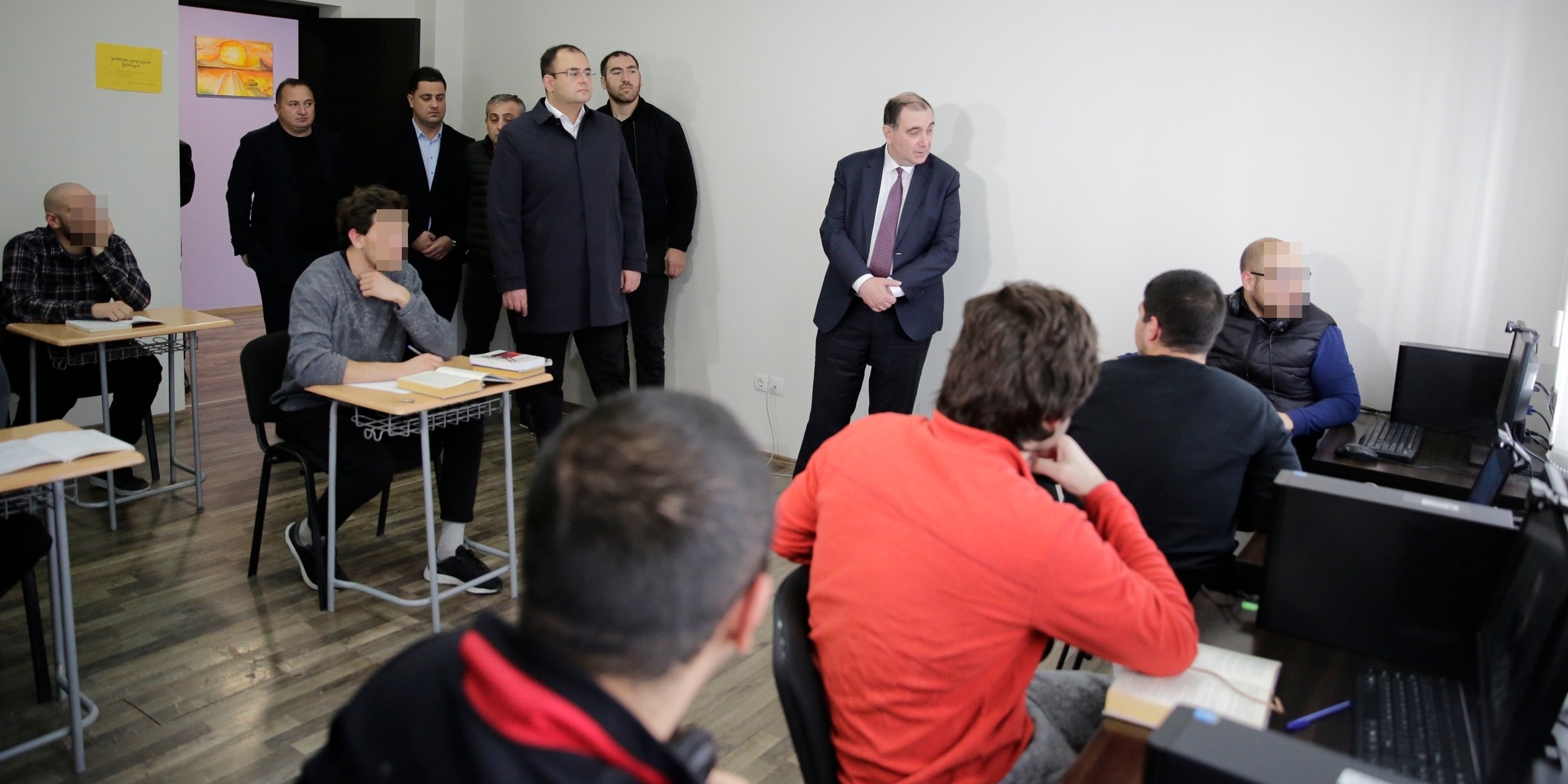
The digital educational platform for convicts in penitentiary institutions has been launched.

The project gives convicted students the opportunity to receive full-fledged higher education remotely; to be involved in the process of university studies; Attend lectures online and have direct, interactive communication with lecturers.

Until now, academic teaching in penitentiary institutions was carried out only through correspondence. Convicted students received study materials and completed written assignments, however, they were deprived of the opportunity to communicate directly with lecturers.

The digital learning platform is implemented in cooperation with the Ministry of Education and Science and includes both undergraduate and master's degrees of authorized universities in Georgia. The first stage of the project was launched at institution No. 16. Minister of Justice, Rati Bregadze and Minister of Education and Science, Mikheil Chkhenkeli got acquainted with the training process today. Ministers also visited places of vocational training and professional employment of convicts.

The Digital University makes university education even more accessible to convicts; The quality and efficiency of teaching increases, which, at the same time, will contribute to the rehabilitation and re-socialization of prisoners.

Other News

Share
Print

The Grand Chamber of the Strasbourg Court Delivers a Judgement on the Cases of the June 20-21, 2019 Demonstrations

The Grand Chamber of the European Court of Human Rights delivered its judgment in the case Tsaava and Others v. Georgia at a public hearing today, 11 December 2025. The case concerns the demonstrations of 20–21 June 2019 and the use of special means to disperse the protesters.

In its judgment, the Grand Chamber reaffirmed that the state has the legitimate right to resort to special means in situations involving attacks or assaults on law enforcement officers and state institutions. The Court also noted that the escalation of the June 20 events and the assault on the Parliament building were encouraged by opposition politicians.

The Court held that the use of force and special means should have been directed exclusively at demonstrators who engaged in violent actions. As the leadership of the Ministry of Internal Affairs at the time failed to ensure adherence to this standard and did not guarantee the proportional use of force, the Court found a violation of Articles 3 (prohibition of ill-treatment), 10 (freedom of expression), and 11 (freedom of assembly) of the European Convention on Human Rights.

The Grand Chamber further noted that the Government of Georgia fully cooperated with the Court during the proceedings and provided all necessary information and materials. Consequently, the applicants’ complaint alleging a lack of cooperation was dismissed. The Court did not find it necessary to examine the complaint under Article 13 (right to an effective remedy).

Following the shortcomings identified in the Chamber’s judgment of 7 May 2024, the government initiated an investigation into the planning and execution of the MIA operation to determine its compliance with the standards established by the European Court.

As a result of this investigation, on 12 November 2025, the Prosecutor’s Office of Georgia initiated criminal proceedings against the former Minister of Internal Affairs, Giorgi Gakharia. The investigation is ongoing.