 Geo
Geo Eng
EngNews
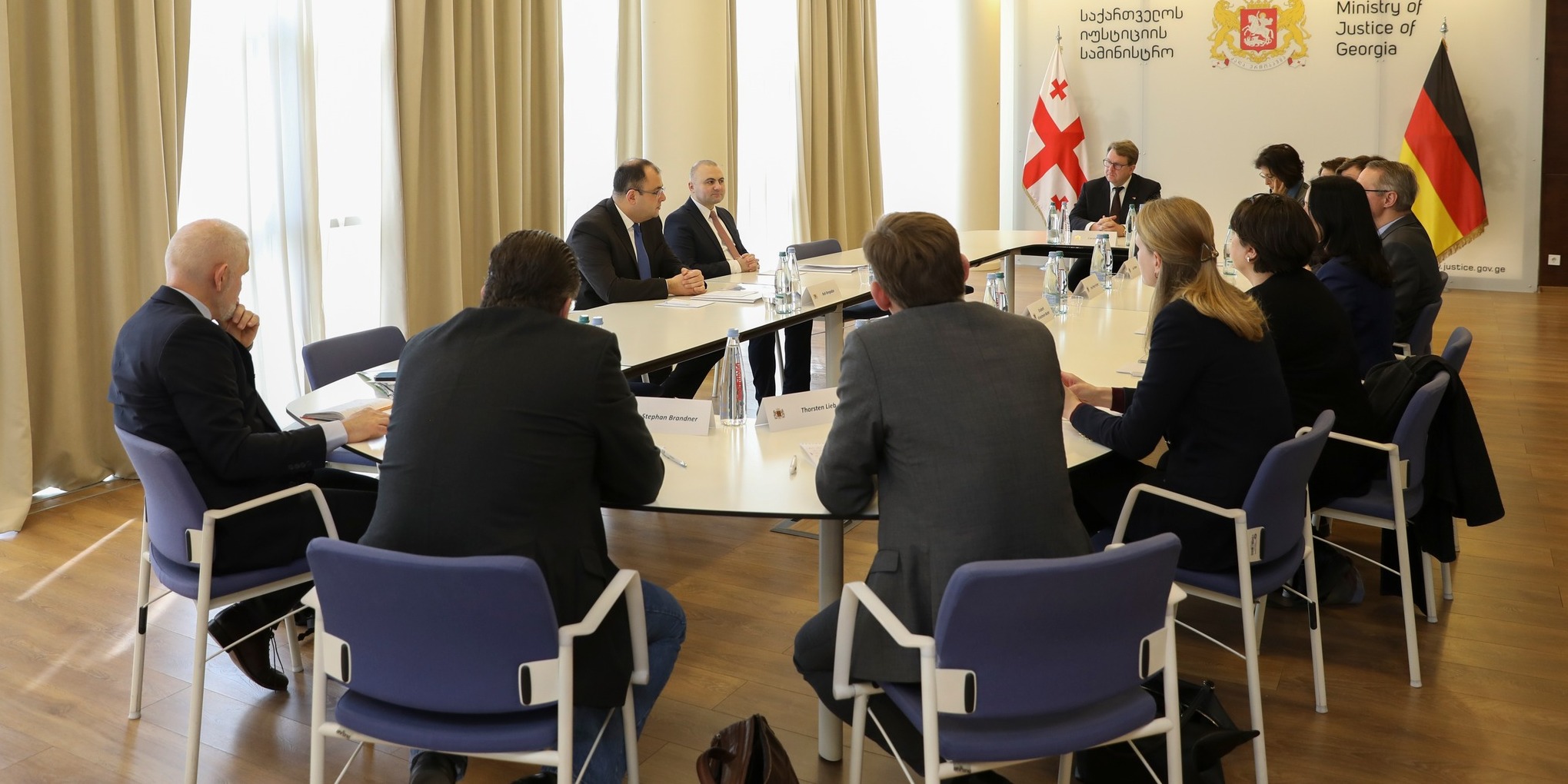
Minister of Justice, Rati Bregadze Holds Meeting with Chairperson and Members of the Legal Affairs Committee of the Bundestag of the Federal Republic of Germany
During the meeting, Minister Rati Bregadze underscored the significance of deepening sectoral cooperation with European counterparts, particularly for Georgia as a candidate country for the European Union.
Highlighting the pivotal role of the Ministry of Justice in advancing Georgia's EU candidacy, Minister Bregadze outlined significant strides, including the implementation of key steps from the EU's 12-step plan. Notably, the ministry's efforts have been instrumental in combating organized crime (step 6) and proactively utilizing Strasbourg Court decisions (step 11) to bolster Georgia's EU candidacy status.
Emphasizing the urgency of legal harmonization, Minister Bregadze stressed the imperative of expediting the alignment of Georgian legislation with EU law within the framework of the EU enlargement policy.
On the topic of legal rapprochement, last week, Minister Bregadze participated in the Conference of Ministers of Justice in Zagreb, where concerted efforts towards fulfilling obligations outlined in Chapter 23 (Justice and Fundamental Rights) were deliberated. Key initiatives discussed include:
- - Submission of legislative amendments mandating all government agencies to seek the Ministry of Justice's legal opinion on EU draft law compliance prior to initiating draft laws in Parliament;
- - Launch of an electronic platform facilitating the recording, planning, and evaluation of the legal convergence process;
- - Development of the "Guide to Approximation of Georgian Legislation to EU Legislation," alongside plans to establish the EU Law Center within the Training Center of Justice.
Rati Bregadze also emphasized the Ministry's proactive stance in fostering legal cooperation with European counterparts, exemplified by the inaugural Georgian-German Legal Forum in 2023, with plans for the second forum in Germany this year.
At the end of the meeting, Minister Bregadze thanked Elizabeth Winkelmeyer-Becker, Chair of Bundestag's Legal Affairs Committee, for Germany's steadfast support and friendship towards Georgia's territorial integrity and European integration.
Deputy Minister of Justice Beka Dzamashvili also attended the meeting.
where the delegation of Bundestag's Legal Affairs Committee also visited a penitentiary institution as part of their visit.