Hotline2 405 505

News

Monday, 15 July, 2024
Share

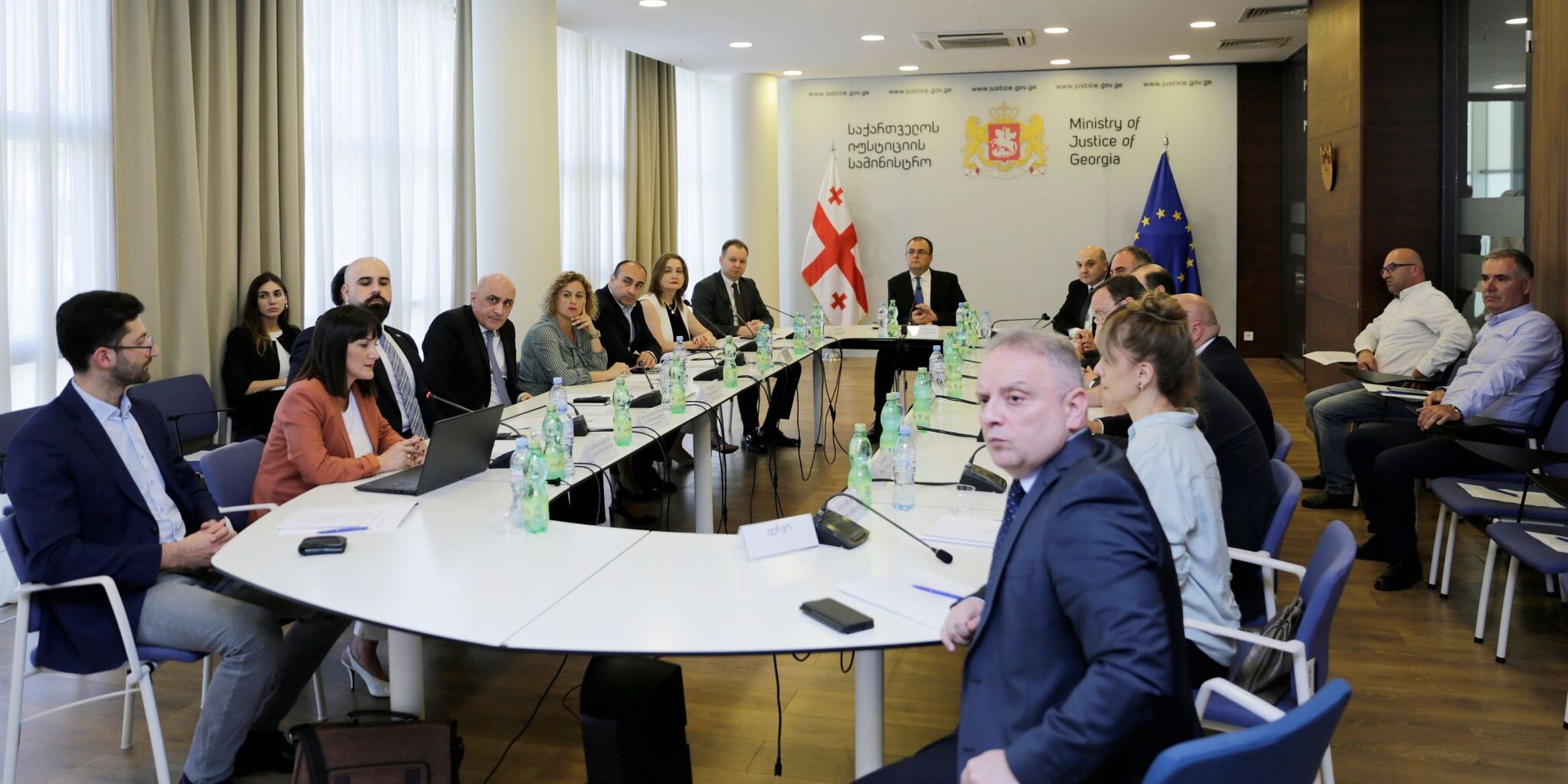
Interagency Task Force for Free and Fair Elections (IATF) for Parliamentary Elections Holds its First Session

The Interagency Task Force for Free and Fair Elections (IATF) was established in accordance with the Election Code. Its primary aim is to prevent violations of election legislation by public servants and respond to any infractions. The commission is chaired by Minister of Justice, Rati Bregadze.

During its first session, the commission reviewed a report from the State Services Development Agency concerning the completion of the election lists. Additionally, the commission members discussed various organizational issues.

In its efforts to monitor the election environment, the IATF will examine information disseminated by the media, as well as data provided by political unions and monitoring organizations. The IATF will formulate recommendations to address identified incidents, thereby promoting a free and fair election environment.

Citizens can report issues within the IATF's jurisdiction via email at iatf@justice.gov.ge or through the hotline: (+995) 599 85 0011.

The session was chaired by Minister of Justice Rati Bregadze, with participation from IATF members including Deputy Ministers of Justice, Internal Affairs, Foreign Affairs, Finance, Defense, Regional Development and Infrastructure, Education, Science and Youth, IDPs from Occupied Territories, Labor, Health and Social Protection, as well as heads of the General Prosecutor's Office, the Special Investigation Service, the State Security Service, the City Hall of Tbilisi Municipality, the State Audit Service, and the Central Election Commission.

The IATF will operate until the Central Election Commission officially publishes the final election results.

Other News

Share
Print
Share
Print

State Commission on Migration Issues Holds Its 34th session

The 34th session of the State Commission on Migration Issues was held at the Ministry of Justice and was chaired by the Chairperson of the Commission, Minister of Justice Paata Salia.

During the session, the Minister of Justice highlighted the Commission’s productive work, which has laid the foundation for strategic and coordinated migration management in Georgia. In this context, the National Migration Strategy for 2021–2030 is being implemented, based on the principle of “Migration and Development” and aimed at promoting Georgia’s integration with the European Union. Paata Salia also emphasized that migration issues are currently being discussed with particular urgency at the international level, especially with regard to the protection of migrants’ rights, and noted the symbolic significance of holding the session on International Migrants Day.

The Commission members reviewed the progress of implementation of the Migration Strategy of Georgia for 2021–2030 and unanimously approved the Strategy’s Action Plan for 2026. The Action Plan was developed with the active participation of the Commission’s member agencies and is aimed at ensuring effective migration management. It focuses on promoting legal migration, combating illegal migration, and supporting the reintegration of migrants.

The Co-Chair of the Commission, Deputy Minister of Internal Affairs Aleksandre Darakhvelidze, presented the comprehensive legislative amendments adopted in 2025 to strengthen the national system of international protection and prevent illegal migration.

Deputy Minister of Health Giorgi Tsagareishvili also addressed the session, reviewing legislative amendments regulating labor migration that are scheduled to enter into force in spring 2026. He further outlined the planned and ongoing measures to support the reintegration of migrants returning to Georgia.

The session was held in an expanded format and was attended by representatives of state agencies, partner international organizations holding consultative status with the Commission, and the Public Defender’s Office.

The State Commission on Migration Issues is a governmental consultative body responsible for discussing and making decisions on key issues related to migration management. The Commission is composed of nine state agencies and is chaired by the Ministry of Justice.