 Geo
Geo Eng
EngNews
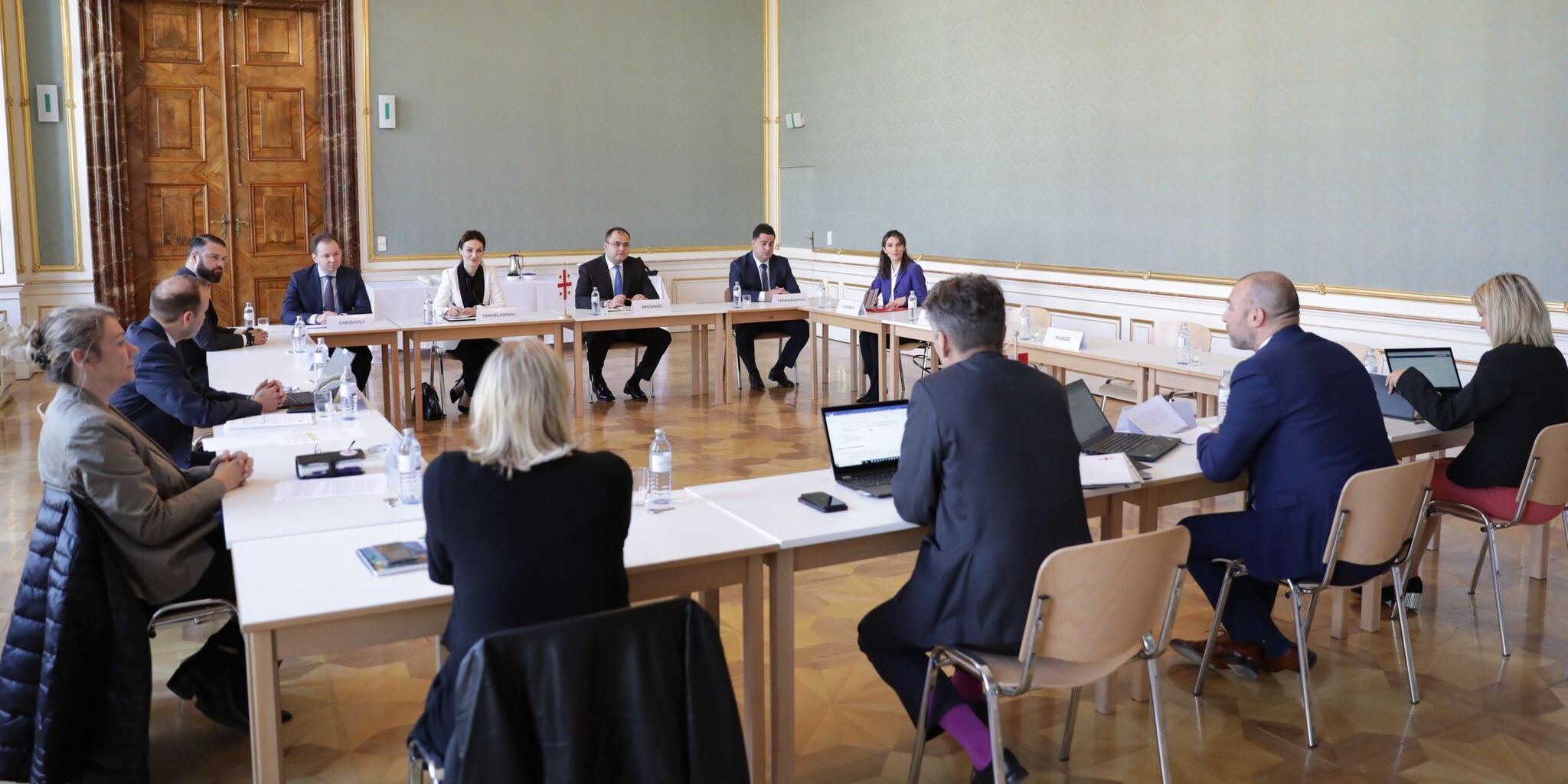
Rati Bregadze Pays Official Visit to the Republic of Austria
Within the framework of the current official visit to Austria, Minister of Justice, Rati Bregadze held the first meeting with the General Director of the Penitentiary Service of the Republic of Austria, Friedrich Alexander König.
The parties shared their experience and existing knowledge in the area of penitentiary services.
At the meeting, the Minister spoke about the achievements in the penitentiary and probation systems of Georgia. He informed the Austrian side about the innovative educational project - Digital University, which increases access to education for convicts.
The Ministry of Justice of Georgia plans to further deepen cooperation with the Republic of Austria in the direction of managing the penitentiary and probation system, which will allow the country to develop rehabilitation and re-socialization programs, activities outside the cell; Employment, educational and sports programs for prisoners.
At the meeting, Rati Bregadze noted that the alignment to the best European standards is a strategic priority of the Ministry of Justice of Georgia and it is reflected in the 10-year development plan of the Justice Ministry.
The Minister of Justice expressed his satisfaction that cooperation in the field of management of penitentiary and probation systems will be deepened and a corresponding memorandum will be signed with the Ministry of Justice of Austria. He also noted that the deepening of sectoral cooperation with European colleagues is particularly important on the path of Georgia's European integration, especially after adopting the European perspective.
At the meeting, they also talked about the construction of small penitentiary institutions. In Georgia, the first small-scale facility for up to 700 convicts will be opened in Laituri. The Minister of Justice invited Friedrich Alexander König to the opening ceremony of Laituri prison in Georgia.
Friedrich Alexander König noted that it was an honor for him to meet with the Minister of Justice of Georgia. "It was a great honor for me to meet the Minister and his delegation to talk about the penitentiary systems of Georgia and Austria and the issues that concern us all. I believe that we can learn a lot from each other, and both sides are very satisfied with this meeting," said König.
The meeting was attended by Deputy Ministers of Justice, Buba Lomuashvili and Tornike Cheishvili, Head of the Special Penitentiary Service, Nika Tshvarashvili and Ambassador of Georgia to the Republic of Austria, Ketevan Tsikhelashvili.