Hotline2 405 505

News

Wednesday, 14 September, 2022
Share

Rebranding of Community Centers of Ministry of Justice Has Started

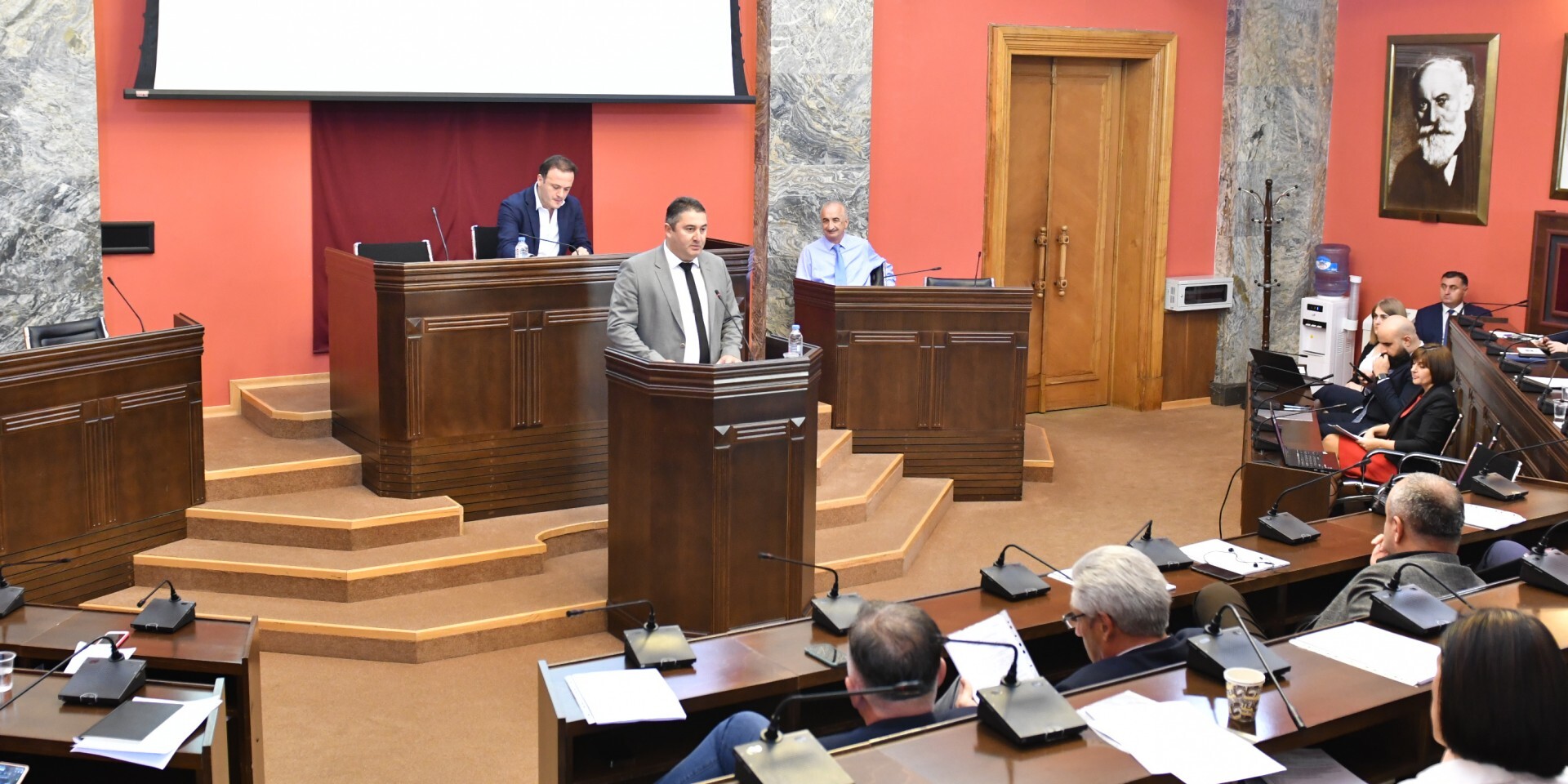
Community Centers of the Ministry of Justice will continue to operate under the brand of the Public Service Hall. Deputy Minister of Justice, Erekle Gvinianidze presented today the initiative at the session of the Regional Policy and Self-Government Committee in the Parliament.

As a result of the rebranding of Community Centers, instead of 250 services, the population living in rural areas will be offered 470 services according to the usual standard of the Public Service Hall.

"The goal of the Ministry of Justice is that by 2024 there will be no more municipalities without a Public Service Hall. It is for this purpose that the construction of Khashuri, Zestafoni, Supsa, Terjola, Samtredia and Akhmeta branches of the Public Service Hall is currently underway, which will be completed in 2022-23. Next year, the construction of the Mtskheta, Sagarejo, Khelvachauri, Tsalenjikha, Zoti, Tolebi, Shrosha, Tsaishi, Didi Digmi and Gldani branches of the Public Service Hall will begin, which will be completed by the end of 2024. Currently, both the infrastructural renewal of public centers and the process of equalizing the services of the Public Service Hall and training of employees are actively underway. After the completion of the rebranding process, a common standard of service quality will be introduced," said Deputy Minister of Justice, Erekle Gvinianidze.

Rebranding is underway in 88 Community Centers throughout Georgia and the process will be completed by the new year. Kachreti Community Center is the first to start operating under the Public Service Hall brand.

In addition, according to the decision of the Ministry of Justice, the salaries of the employees working in the region and the capital were equalized.

Currently, 28 Public Service Halls, 88 Community Centers and 6 Mobile Public Service Halls are functioning throughout the country.

Other News

Share
Print

Memorandum of Understanding on Cooperation in Digital Governance Signed Between the Ministry of Justice of Georgia and the Ministry of the Interior and Safety of the Republic of Korea

As part of his visit to the Republic of Korea, Georgian Minister of Justice Paata Salia met with Yun Ho-jun, Minister of the Interior and Safety of the Republic of Korea. During the meeting, the two sides discussed opportunities to further strengthen cooperation in digital development.

Minister Salia emphasized the importance of the partnership between Georgia and the Republic of Korea, particularly in the areas of artificial intelligence, innovative technologies, electronic services, and digital governance.

“We are particularly interested in the concept of democratic governance based on artificial intelligence. The central idea behind this approach is that AI should not merely serve as a technological tool, but should be used to expand access to public services and enable the state to respond more quickly and effectively to citizens’ needs,” said the Minister of Justice of Georgia.

Paata Salia also highlighted Georgia’s significant progress in recent years in the areas of digital governance, electronic services, cybersecurity, and information security.

According to Yun Ho-jun, Minister of the Interior and Safety of the Republic of Korea, cooperation between the two countries will bring significant benefits to every citizen of Georgia:

“We had a very productive meeting with Georgian Minister of Justice Paata Salia. We had an excellent discussion on how to deepen digital cooperation between our two countries and between our respective ministries, particularly in accelerating digital development and promoting the adoption of artificial intelligence technologies.”

At the conclusion of the meeting, the Ministry of Justice of Georgia and the Ministry of the Interior and Safety of the Republic of Korea signed a Memorandum of Understanding on cooperation.

The memorandum provides for the establishment of a Digital Governance Cooperation Center, which will facilitate the exchange of knowledge and expertise between the two countries and support the organization of joint working sessions, seminars, and forums. The Center also has the potential to serve as a regional hub for developing and implementing innovative approaches to digital governance.

Under the memorandum, the two sides also plan to further develop Georgia’s unified electronic services portal, my.gov.ge.

In early October, Georgia, together with its Korean partners, will host a high-level workshop on artificial intelligence.

The meeting was also attended by First Deputy Minister of Justice Beka Dzamasvhili; Deputy Minister Tamar Zodelava; Sandro Tsirekidze, Chairman of the LEPL Digital Governance Agency; and Mikheil Tigishvili, Ambassador Extraordinary and Plenipotentiary of Georgia to the Republic of Korea.

Share
Print

Deputy Ministers of Justice Host Delegation from Japan’s Digital Agency

A delegation from Japan’s Digital Agency, led by Hideato Kawasaki, Parliamentary Vice-Minister for Digital Transformation of Japan, visited Georgia and held a meeting with representatives of the Ministry of Justice of Georgia.

Deputy Ministers of Justice Lana Morgoshia and Tamar Zodelava briefed the Japanese delegation on the reforms implemented by the Ministry of Justice of Georgia to improve access to and digitalization of public services. The discussions also focused on the Ministry’s priorities and major recent developments in the delivery and development of state services in Georgia.

The meeting highlighted that, across the country, citizens have access to 127 Public Service Halls offering user-oriented public and private services. To help overcome geographical barriers, 20 Mobile Public Service Halls serve residents in 90 villages. Services are also available at Public Service Halls operating within penitentiary institutions. More than 400 public and private services can be accessed through the unified electronic services portal, MY.GOV.GE. Georgia has also introduced the “Smart Contract”, a remote mechanism for registering private property rights with the support of artificial intelligence.

Particular attention was paid to Georgia’s systematic land registration reform, which has achieved international recognition. According to the World Bank, Georgia’s model of systematic land registration is exemplary on a global scale, and the National Agency of Public Registry has significant potential to provide expert support to other countries. As part of the reform, the National Agency of Public Registry carried out surveying works and registered citizens’ ownership rights to land plots free of charge across 59 municipalities throughout Georgia.

The meeting was attended by Ketevan Sarajishvili, Head of the Department of International Relations and Legal Cooperation of the Ministry of Justice; Vakhtang Zhvania, Chairperson of the Public Service Hall; Rusudan Kokhodze, Chairperson of the State Services Development Agency; and Sandro Tsirekidze, Chairperson of the Digital Governance Agency.