Hotline2 405 505

News

Monday, 13 December, 2021
Share

Rati Bregadze Meets with Minister of Justice of Italy


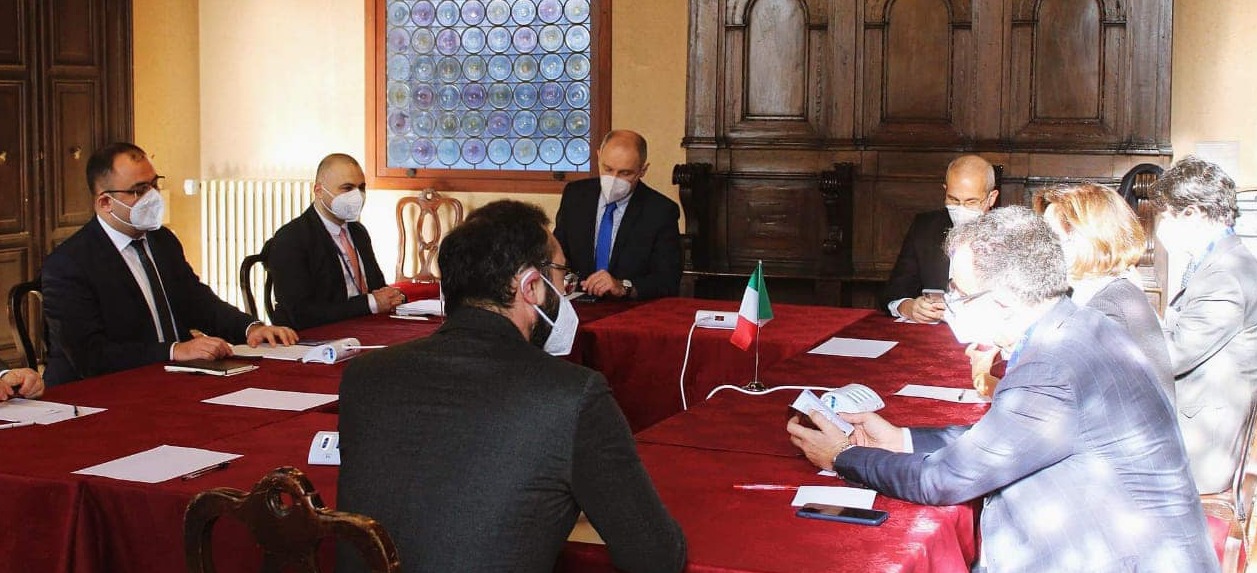
At the meeting with his Italian counterpart, the Minister of Justice of Georgia, Rati Bregadze discussed the prospects of cooperation between the Ministries of Justice of the two countries. The meeting of the Ministers of Justice was held within the framework of the Ministerial organized by the Council of Europe in Venice.

The Ministerial "Crime and Criminal Justice - The Role of Restorative Justice in Europe" is attended by President of the Parliamentary Assembly of the Council of Europe, Rick Demes, President of the Venice Commission, Gianni Buquicchio, Minister of Justice of Italy, Marta Cartabia, and justice ministers of other European countries. The Minister of Justice of Georgia is scheduled to deliver a speech at the event.

Rati Bregadze introduced to Marta Kartabia the ten-year development strategy of the Ministry of Justice of Georgia. Particular attention was paid to the process of harmonization of Georgian legislation with the EU and the issues of cooperation with Italy in this regard, the reform of probation and penitentiary systems, access to public services, including the innovative project of mobile public service halls.

The parties also discussed the possibility of concluding a memorandum of cooperation. It is also planned to organize the student exchange programs between the two countries.

At the end of the meeting, Rati Bregadze invited the Italian Minister of Justice to Georgia.

During his visit to Italy, the Minister of Justice of Georgia will deliver a speech at three sessions of the Ministerial. Face-to-face meetings are planned with the Ministers of Justice of Hungary, Armenia and Azerbaijan.

Other News

Share
Print

Strasbourg Court Declares Complaints on Independence and Impartiality of Supreme Court Judges of Georgia Inadmissible

The European Court of Human Rights (ECHR) upheld the legal position presented by Georgia’s Ministry of Justice and, based on the submitted evidence, declared the complaints in Pirtskhalava and Y v. Georgia and Goginashvili v. Georgia inadmissible.

In these applications, the complainants alleged that one of the judges of the Supreme Court who examined their cases was biased. Additionally, the applicants in Pirtskhalava and Y claimed that Judge Sh.T. had not been appointed in accordance with the law.

The ECHR accepted the arguments of the Ministry of Justice and declared all three complaints regarding judicial impartiality inadmissible. In its decision, the Strasbourg Court reviewed the reforms undertaken by the Georgian authorities since 2012 to improve the justice system. In particular, it highlighted reforms such as: lifetime judicial appointments, improvements in the procedures for the appointment and promotion of judges, strengthening the role and functional independence of the High Council of Justice, and constitutional amendments that further refined the selection and appointment procedures for Supreme Court judges.

It is worth noting that the ongoing legal proceedings against Irakli Pirtskhalava concern the criminal case related to the murder of Buta Robakidze. Pirtskhalava additionally alleged that his criminal trial had been unfair, arguing that he had not been given the opportunity to question his former co-defendants and other witnesses or effectively challenge the evidence. The Strasbourg Court found no indication of a violation of his right to a fair trial and therefore declared his additional complaints inadmissible as manifestly ill-founded.