Hotline2 405 505

News

Saturday, 09 November, 2024
Share

Land Registration System Reform Extends Until 2025

The Ministry of Justice has been spearheading a nationwide land registration system reform since 2022, currently active in 59 municipalities. This initiative aims to register land plots owned, used, or even informally occupied by citizens - completely free of charge.

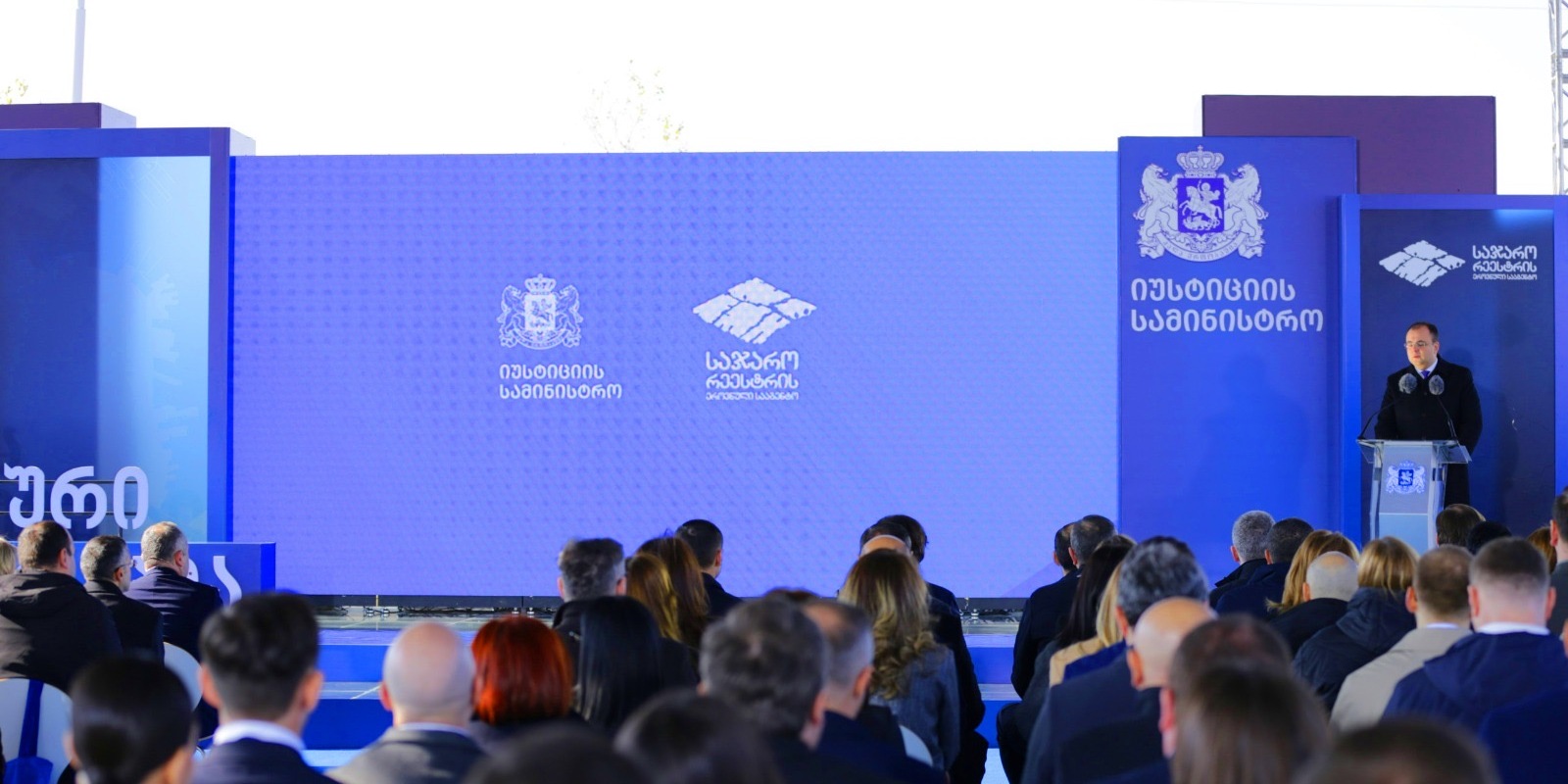
Progress to date was showcased at an event hosted at the Saakadze Training Base of the Justice Training Center. Prime Minister Irakli Kobakhidze and Justice Minister Rati Bregadze addressed the attendees, while David Devidze, Chairperson of the National Agency of Public Registry, delivered the main presentation.

Since the project's inception, over 1.5 million land plots have been surveyed, and ownership rights for more than 1 million plots have been successfully registered. Additionally, around 1,000 individuals have been trained and employed to support the reform.

Given the remarkable progress, the government has decided to extend the reform until the end of 2025 to ensure that all land plots across the country are accounted for and registered. Upon completion, the initiative will result in a unified cadastral database, clearly delineating private, state, and municipal property.

During the event, Justice Minister Bregadze also showcased the modern equipment and tools being utilized for the reform, as well as the newly inaugurated Saakadze Training Base.

The presentation was attended by representatives from the executive and legislative branches, deputy ministers of justice, state officials, and key stakeholders, including representatives from the Ministry of Justice, the National Agency of Public Registry, and participating self-government bodies.

Other News

Share
Print
Share
Print

According to the Strasbourg Court, Publicly Made Insulting, Obscene, and Degrading Statements Fall Outside the Scope of Freedom of Expression

The European Court of Human Rights in Strasbourg upheld the position of the Ministry of Justice in the case of Miladze v. Georgia, confirming that publicly made insulting, obscene, and degrading statements directed at public officials are not protected under the right to freedom of expression.

The case concerned a video published on the social media platform TikTok in 2022, in which the applicant, civil activist Irakli Miladze, used obscene and insulting language toward the Mayor of Tbilisi, City Hall employees, and police officers. As a result, the national courts imposed a fine of 500 GEL, the minimum penalty provided for by law.

The Strasbourg Court unanimously held that the applicant’s statements did not amount to political criticism or the expression of views on a matter of public interest. According to the Court’s assessment, the language used was intended primarily to humiliate and insult public officials.

The Court also agreed with the reasoning of the national courts, noting that they had properly distinguished between harsh political criticism, which is protected in a democratic society, and personal insults, which are not. The judgment further emphasized that the sanction imposed on the applicant was minimal and proportionate, as he received only the lowest fine available under the law.

Today’s ruling by the Strasbourg Court reaffirmed an important principle: freedom of expression is one of the fundamental values of a democratic society and protects even strong and offensive criticism; however, it does not extend to humiliating or personally insulting statements directed at others, including public officials and civil servants.

The judgment further underscores that the state is entitled to protect political officials and public servants from unjustified verbal abuse and insults, ensuring that they are able to perform their duties in an environment free from attacks that undermine their dignity.

The Court’s assessment once again highlights the fundamental importance of freedom of expression, while clearly establishing that the exercise of this right — particularly on the internet and social media platforms — must not infringe upon the dignity and rights of others.